


Nasdaq fell 1.7%. SMH dropped over 4%. TSMC raised capex. Oil held near $79. Prediction markets found another insider-risk test.
The narrow rally broke where it was weakest.
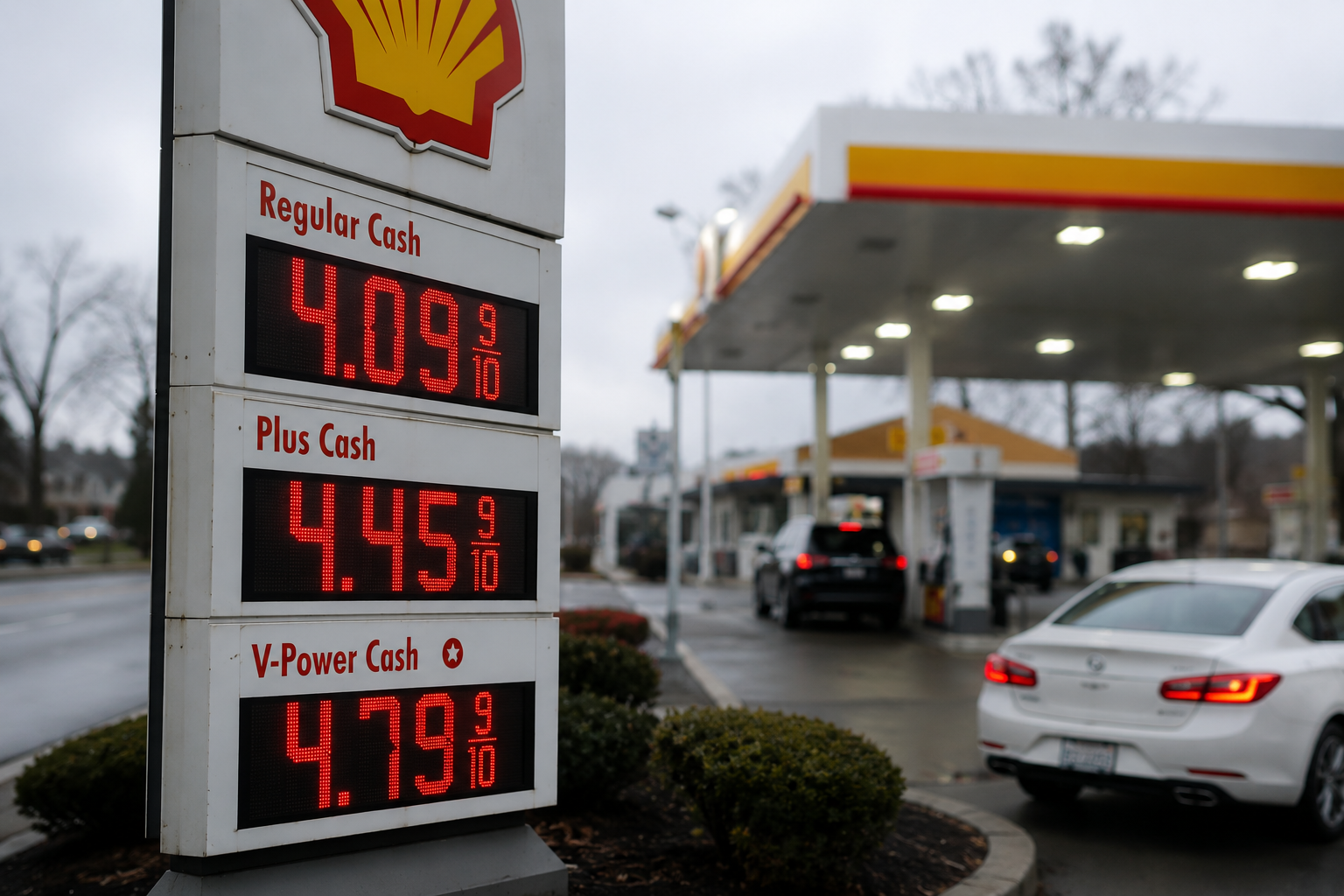
The 10-year yield rose to 4.57%. Oil eased 0.79% to $78.97. Gold fell 1.57%. The euro softened.
That is the surface.
Underneath, the market sold the AI supply chain.
TSMC (TSM) fell about 3% after lifting its 2026 capital spending forecast to $60 billion to $64 billion. The prior range was $52 billion to $56 billion.
That should have sounded like demand strength.
The market read it as cost pressure.
SMH fell more than 4%. Arm (ARM) dropped over 7%. Micron (MU) and AMD (AMD) lost more than 6%. SK Hynix fell more than 11%.
The AI trade did not die. It got repriced.
A Tiny Government Task Force Just Finished a 20-Year Mission.
Almost no media coverage. Almost no public awareness.
But what they confirmed is one of the largest U.S. territorial expansions in modern history — a resource claim worth an estimated $500 trillion.
Thanks to sovereign U.S. law, this isn't just a national asset. It's an "American birthright."
Every citizen now has the legal right to stake a claim. Very few even know it exists.
The first profits will go to those who move early.
Get the full briefing while the "claim" window remains open
— Dylan Jovine, CEO & Founder, Behind the Markets
The market stopped rewarding AI spending by default.
For months, higher capex was proof. More data centers meant more chips. More chips meant more revenue. More revenue meant higher multiples.
Thursday challenged that.
TSMC raising capex said the buildout is still large. It also said the cost of staying in the AI race is rising.
Alphabet (GOOGL) added another crack. The stock fell more than 4% after reports that its Gemini 3.5 Pro model is delayed.
That matters because the market had rotated from chip supply into platform adoption. If platforms start missing product timelines while suppliers raise spending, the AI trade has a new problem.
The Cost Reset
Investors are still paying for AI winners. They are no longer paying for every AI cost line.
The market outside tech looked better.
Eight of 11 S&P sectors finished higher. The equal-weight S&P 500 ETF rose. Earnings were solid too. More than 87% of early S&P 500 reporters have beaten estimates.
The data also held.
Jobless claims fell to 208,000. Retail sales rose 0.2%.
That is not recession tape.
The problem is concentration. A healthier broad market could not offset weakness in the names that carried the index.
The Nasdaq fell because tech mattered more than breadth.
The Breadth Split
The economy looked fine. Earnings looked fine. The index still fell because the leadership layer cracked.
Satellite Confirms: Elon Musk Activating Strange 'Dark Energy' Across U.S. South

Confirmed by satellites 300 miles above the Earth's surface... Elon Musk is rolling out a breakthrough technology that could replace our need for foreign oil and ignite a $10 trillion boom a small group of stocks. Click here to learn how you can invest in this before it becomes mainstream.
Hormuz stayed in the price.
Oil slipped, but it did not break lower. WTI held near $79. Brent remains high enough to keep inflation risk alive.
The longer fix is pipelines. Gulf producers are trying to reduce dependence on Hormuz. Goldman Sachs estimates regional pipeline capacity could rise above 14 million barrels per day by the end of 2028. That would cover more than 60% of Gulf states’ pre-war export volume.
Iraq needs it most. Its output fell to 1.9 million barrels per day in June from 4.2 million in February.
The UAE wants to double capacity through Fujairah. Saudi Arabia is looking at adding 2 million barrels per day through its Red Sea route.
But pipelines are not immunity. Iran has already hit Saudi pipeline infrastructure. The Houthis still threaten Bab el-Mandeb.
The Route Problem
Bypassing Hormuz lowers one choke point. It does not remove the war premium.
Prediction markets had their insider-risk moment.
A longtime White House teleprompter operator was placed on unpaid leave after investigators said he made more than $100,000 trading on Trump speech contracts. The trades were allegedly tied to Kalshi “Mentions” markets, where users bet on whether certain words or topics will appear in speeches.
Kalshi flagged the suspicious activity and alerted the CFTC.
The case matters because it shows the core issue. Prediction markets turn private timing into tradable value.
Regulators are circling the same line from another side. The SEC may get involved as contracts move closer to public companies and securities. A market on whether Nvidia rises 5% clearly touches securities. A market on whether Apple releases a product sits in the gray zone.
The Insider Test
Prediction markets are now large enough to create market-structure problems, not just novelty headlines.
ICE. The Epstein Files. Tariffs.
That’s what the media wants you to focus on.
But behind the scenes, it seems President Trump is quietly preparing something far more shocking — that will leave even his most loyal MAGA patriots stunned.
It’s NOT being debated on cable news or on X.
But it could make you enormously rich in 2026. Click here to find out why immediately.
Thursday was not a growth scare. It was a leadership scare.
Jobless claims fell. Retail sales rose. Most sectors gained. Earnings beats held.
But the market sold because the AI leaders stopped acting like clean winners.
That is the difference.
The economy did not crack. The premium did.
Prediction markets show a similar split. July Fed no-change sits at 95.8%. A 25 basis point hike is only 4%. October is less clean. No-change is 68%. A 25 basis point hike is 18%. A 25 basis point cut is 9%.
Hormuz is worse. Traffic normal by July 31 is below 1%. August 31 is 12%. December 31 is 55%.
The U.S. invading Iran before 2027 sits at 23%.
The Premium Test
The tape can handle slower growth. It struggles when the highest-multiple trade gets a cost problem.
The day closed with the AI reset in control.
Chips fell worldwide. TSMC raised spending. Alphabet slipped on model-delay reports. Oil stayed near $79. The broad market held better than the index. Prediction markets faced another insider-risk test.
What is priced: a July Fed hold, stronger economic data, solid earnings breadth, and no quick Hormuz fix.
What is not priced: AI capex turning into margin pressure, Alphabet delays spreading to other platforms, pipeline work failing to lower the oil premium, or prediction-market rules tightening faster than volumes grow.
The morning asked whether a few megacaps could hold the tape.
The close answered.
Not when the chip chain breaks beneath them.
Capital moves early. Coverage catches up. The gap between the two is worth watching.
