
THE DAILY PULSE The bond market found buyers on Wednesday. The rest of the market paid the price. The S&P 500 slipped 0.23% to about 7,801, a day after its record close. The Nasdaq fell 0.22%. The Dow lost 341 points, or 0.66%. The Russell 2000 dropped 1.3%, and the VIX held near 15. The 10-year yield touched about 5.36% before the open, its highest since April 2002. It ended at 5.28%, up 1 basis point. Crude slipped as Tropical Storm Isaias took aim at the Gulf Coast, while heating oil and natural gas rose. WTI hit $90.98 before falling back near $89. Gold fell about 1.3%, and bitcoin lost about 2.4%. The long end got its bid. The small end got the bill. PREMIER FEATURE I've Read a Lot of Mining Filings. They All Sound the Same.This one stopped me cold. Sitting in the filings of one small American gold company is a phrase I have never seen on a gold project: substantial support and partnership from the Department of War. The Department of War does not partner with gold miners. Except it's partnering with this one. Here's why. The deposit carries a second metal — one China formally banned from export to the United States. The only domestic reserve of it in the country. Gold for the dollar war. The banned metal for the shooting war. Both from the same pit. Washington didn't stop at words. On May 21, 2026, a federal bank voted unanimously to lend nearly $3 billion to build it. Congress got 25 days notice. Nobody objected. When final papers are signed, funding risk goes to zero — and Wall Street re-rates the stock from speculative developer to federally backed strategic asset. The company is about one fiftieth the size of Newmont. Read the filing for yourself THE LEAD SIGNAL Buyers came back at 5.3%, and they came in size.Treasury sold $39 billion of 10-year notes at 5.30%, and dealers were left with just 2.5%. Their average share is 9.4%. Indirect bidders, a group that includes foreign official buyers, took 80.3%, against a 72.4% average. Bids came to 2.77 times the amount on offer. The price was the catch. The sale cleared 0.47 point above September's 4.834%. After the results, the 10-year eased back toward Tuesday's close. Polymarket's rate ladder gave little ground. A 10-year close at 5.5% or higher before 2027 trades near 43%, from about 45% on Tuesday. A 5.7% close sits near 20%, and 6% near 8%. Treasury sells $22 billion of 30-year bonds on Thursday. The Clearing Price Strong demand at 5.3% shows who will buy, not that yields have peaked. The long end cleared without leaning on dealers. But buyers asked for almost half a point more than in September. Thursday's 30-year sale will show whether that demand reaches the longest bonds. THE ARCHITECTURE The Fed's minutes pointed to another hike by year-end. They did not say which meeting. Most officials assessed that another increase "would likely be appropriate by year end." A couple had raised their estimate of the neutral rate. Several saw policy as not restrictive or only mildly so. The minutes predate September's 29,000-job payroll gain and a softer inflation report. Kalshi's October hike contract barely moved after the release and sits near 16 cents, with a hold near 83%. Its December hike contract trades near 72%. A few officials also tied higher long yields to "increased expectations for AI-related borrowing." SpaceX is in talks to raise about $40 billion for Nvidia chips, people familiar with the talks said. Apollo is expected to lead, and about $30 billion would be investment-grade debt. The December Default Traders read "by year end" as December. That kept October quiet while the hawkish detail moved to the later meeting. A higher neutral rate means a December hike would tighten less than it looks. September's CPI, due Oct. 14, is the last big test of that split before the October meeting. FROM OUR PARTNERS The REAL Reason Trump Is Invading Iran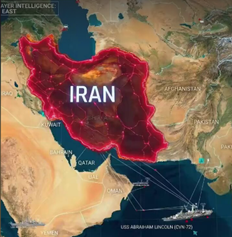
For a moment… Forget about Trump’s ties to Israel. Forget about reports of Iran’s nuclear program. Because my research has led me to believe we’re risking World War 3 with Iran for a completely different reason. Click here to find out what it is. If you have even a single dollar invested in the U.S. stock market, this is going to directly impact you. Discover the reason here. THE CROSS-CURRENTS The index stayed near its record. The parts most tied to borrowing costs did not. The Russell 2000 fell to its lowest close since May and now sits about 1.1% above correction territory. The Dow transports fell about 0.9%. Industrials led the S&P 500's decliners. Crypto showed the same strain. Bitcoin hit its lowest level of October, near $82,740, and did not recover when yields eased. Ether fell about 4.5%. Strategy, which holds bitcoin as its main asset, fell about 6.8%. The Rate Bill Higher yields hit the borrowers before the index. Small caps, transports and leveraged crypto holders all depend on cheaper funding, and they fell while the S&P 500 barely moved. A Russell close below 2,761.58 would mark a correction. If these groups keep lagging as yields ease, the weakness is about growth, not only rates. PARTNER SPOTLIGHT There's a HUGE Downside to This Bull Market (And It's Not a Crash)It's hard to deny we're in a bull market. Stocks, real estate, gold, and bitcoin are hitting record highs month after month. But one multi-millionaire investor says this is unlike any bull run we've seen before. "There's a dark reason why so many assets are levitating—it's a sign we've entered the Most Terrifying Bull Market in History." For the full story, click here. 
THE FORETELL LENS Wednesday's contracts priced a market that found its level and kept its risks. The October hike held near 16 cents while December sat near 72%. The 10-year ladder kept 5.5% near 43% after a strong auction. The Hormuz year-end contract stayed near 18%. The Price of Clearing Treasury buyers came back at 5.3%, but no contract priced relief. The bid came at a higher coupon, and the cost moved down the market to small caps and crypto. FINAL FRAME Wednesday showed that long bonds can still find buyers. It also showed the price. The 10-year cleared at 5.30% with dealers barely involved. The minutes kept a year-end hike in view. Small caps and bitcoin took the bill. What is priced: a December hike near 72%, a 5.5% 10-year close near 43%, and Hormuz normal by year-end near 18%. What is not priced: a weak 30-year sale, a hot CPI pulling the hike forward, or a small-cap correction. The bonds found their buyers. The market is still paying them. Capital moves early. Coverage catches up. The gap between the two is worth watching. 3 Market Signals Most Investors Aren't WatchingThe headline is usually the last place the story shows up.
By the time everyone is talking about a stock… the signals underneath it may have been changing for weeks. • Institutional money moves. • Options activity changes. • Management confidence shifts. • Fundamentals improve, or quietly begin telling a different story. That’s exactly what our analysts found in three stocks where the evidence stopped agreeing with itself.
And in all three cases, the story is still developing. See the 3 Stocks, Get the Free Report → | 


