THE DAILY PULSE Stocks that lean hardest on borrowed money fell furthest after a hot inflation report.The S&P 500 fell 1.1% to 7,720.97, and the Nasdaq Composite lost 1.9%. The Dow slipped 0.1%. The two-year Treasury yield jumped about 13 basis points after the report, then gave nearly all of it back to end near 4.82%. U.S. crude rose about 1% to near $95, gold fell 1.3% to near $4,121, and bitcoin fell nearly 2% to near $81,800. The Russell 2000 fell 1.9% and closed about 11% below its August record, past the 10% line that usually marks a correction. Bitcoin slipped about 2%, and listed crypto companies fell several times as far. The surprise was one tenth of a point. The selling went much further. PREMIER FEATURE The markets are in a dramatically different place than they were in January.The Fed is raising rates. Geopolitical instability and energy prices are pushing inflation up. But S&P 500 earnings growth is still expected to continue — and our analysts have identified 10 stocks well-positioned to perform through Q4 and into year-end. From tech powerhouses to fuel cell makers to reliable dividend growers — all 10 vetted by MarketBeat's analysts and featured in our just-updated 10 Best Stocks to Own: Fall 2026 report. Tickers, trends, and growth potential. Yours free. 👉 Click here to get it now THE LEAD SIGNAL A second hot core reading put an October rate hike back in play.Core consumer prices rose 0.3% in September for a second straight month, a tenth above forecasts. Headline prices rose 0.6% on the month and 3.7% from a year earlier. Gasoline supplied more than half of the monthly gain. Goods and services outside food and energy both sped up. After inflation, hourly pay fell 0.5% on the month. Futures put the chance of an Oct. 28 hike above 40% after the report, up from about 22% before it, CME FedWatch data showed. The Fed's Beige Book, gathered before the report, found price growth at least moderate in 11 of 12 districts. Only two districts reported moderate growth in activity. Every district report mentioned higher oil prices. Firms in several districts expect to raise prices again as contracts reset. Prices Broad, Growth Thin Core prices have now risen 0.3% twice in a row, and the Beige Book found price pressure in nearly every district. Activity grew at a moderate pace in only two. That leaves the Fed weighing firm prices against a soft economy two weeks before it meets. Thursday's producer prices and retail sales are the next test. Rising input costs with weak spending would match the margin squeeze firms described. THE ARCHITECTURE The steepest AI losses came at the companies that borrow to build it.CoreWeave fell about 15% while yields on its 2031 and 2032 notes stood near 15%, CNBC reported. Those notes pay coupons below 10%, so they trade well below face value. Nebius fell about 10%. Nvidia (NVDA), which supplies chips to both, fell about 3%. Federal Reserve staff mapped the funds that sell private credit to individual investors. The most concentrated are perpetual non-traded business development companies. At the end of 2025, they held 93.4% of their portfolios in private credit. Their average leverage was 0.90 times, and short-term liquid assets were 0.2% of holdings. They typically cap share repurchases near 5% of net assets a quarter. Leverage Pays First The chipmaker fell far less than the companies borrowing to buy its chips. Bond investors now demand far more to lend to CoreWeave than its notes pay. Retail private-credit funds lean on withdrawal caps more than on cash. Both depend on lenders and investors staying patient while rates rise. If Thursday's data lift hike odds again, that patience costs more. THE CROSS-CURRENTS Oil producers set records as reports detailed the damage from Tuesday's strikes on a cargo ship and Aramco's headquarters.The three largest U.S. oil companies by market value touched all-time highs as U.S. crude rose. The International Energy Agency counted 2.5 million barrels a day of returning supply in September. It said renewed attacks "leave the recovery fragile." The Singapore-flagged container ship GFS Pride sank near the Strait of Hormuz. Iran's Revolutionary Guards said a container ship hit a mine. Singapore's port authority said the ship was reportedly struck by a projectile. Reuters reported, citing three people with direct knowledge, that Aramco's Dhahran headquarters suffered extensive damage. Saudi Arabia's energy ministry has called it a "limited fire." Supply Back, Risk Too Supply is coming back, and producer shares still set records. The sinking and the Aramco damage show how quickly returning barrels can be put at risk. The Houthis said attacks on Saudi oil sites will continue. A lull in attacks would test those share prices. THE PREDICTION MARKET LAYER The day's fastest repricing came in a Fed contract, and most of it did not last.Kalshi's contract on an October rate hike jumped from 18 cents before the report to 55 cents within 40 minutes. Sellers then took back more than half the gain. It last traded at 33 cents after the close. CME FedWatch odds followed a similar arc and eased to about 37% by mid-afternoon. Bets on this year's congressional races have topped $220 million, Reuters reported. The figure comes from an Anti-Corruption Data Collective analysis. It compares with $92 million for the 2024 congressional cycle. On Polymarket's international platform, the top 1% of wallets account for 70% of congressional volume. Fast Money, Partial Retreat The October contract roughly tripled on the data and then gave back much of the move. A 33-cent price implies about a 33% chance under the contract's rules. The 55-cent peak printed on about 600 contracts, a small trade. Prices that rest on a few large wallets can move on those traders' positions alone. Neither price is evidence of the outcome. PARTNER SPOTLIGHT The REAL Reason Trump Is Invading Iran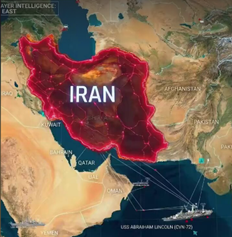
For a moment… Forget about Trump’s ties to Israel. Forget about reports of Iran’s nuclear program. Because my research has led me to believe we’re risking World War 3 with Iran for a completely different reason. Click here to find out what it is. If you have even a single dollar invested in the U.S. stock market, this is going to directly impact you. Discover the reason here. THE FORETELL LENS Two contracts met big news on Wednesday and reacted in different ways. Kalshi's Fed contract tripled within 40 minutes of the inflation data. Polymarket's contract on Washington announcing an end to its naval blockade of Iran by Oct. 31 held near 12.5 cents. Priced Before the News The Fed contract repriced within minutes of a surprise in scheduled data. The blockade contract already sat near a one-in-eight chance, and the sinking left it there. A flat price after big news is still a reading. FINAL FRAME Stocks sold off broadly on Wednesday after a one-tenth inflation surprise. Core prices ran hot again, and futures put an October hike back in play. Borrowers took the worst of it, while oil producers set records. A Fed contract tripled and then gave back more than half. Thursday's data will show whether the market keeps that bet. Capital moves early. Coverage catches up. The gap between the two is worth watching. 3 Market Signals Most Investors Aren't WatchingThe headline is usually the last place the story shows up.
By the time everyone is talking about a stock… the signals underneath it may have been changing for weeks. • Institutional money moves. • Options activity changes. • Management confidence shifts. • Fundamentals improve, or quietly begin telling a different story. That’s exactly what our analysts found in three stocks where the evidence stopped agreeing with itself.
And in all three cases, the story is still developing. See the 3 Stocks, Get the Free Report → |