


Dow gained 560 points. Oil fell 4.4%. Micron and AMD sank again. July still prices a hold, but September hike odds rose.
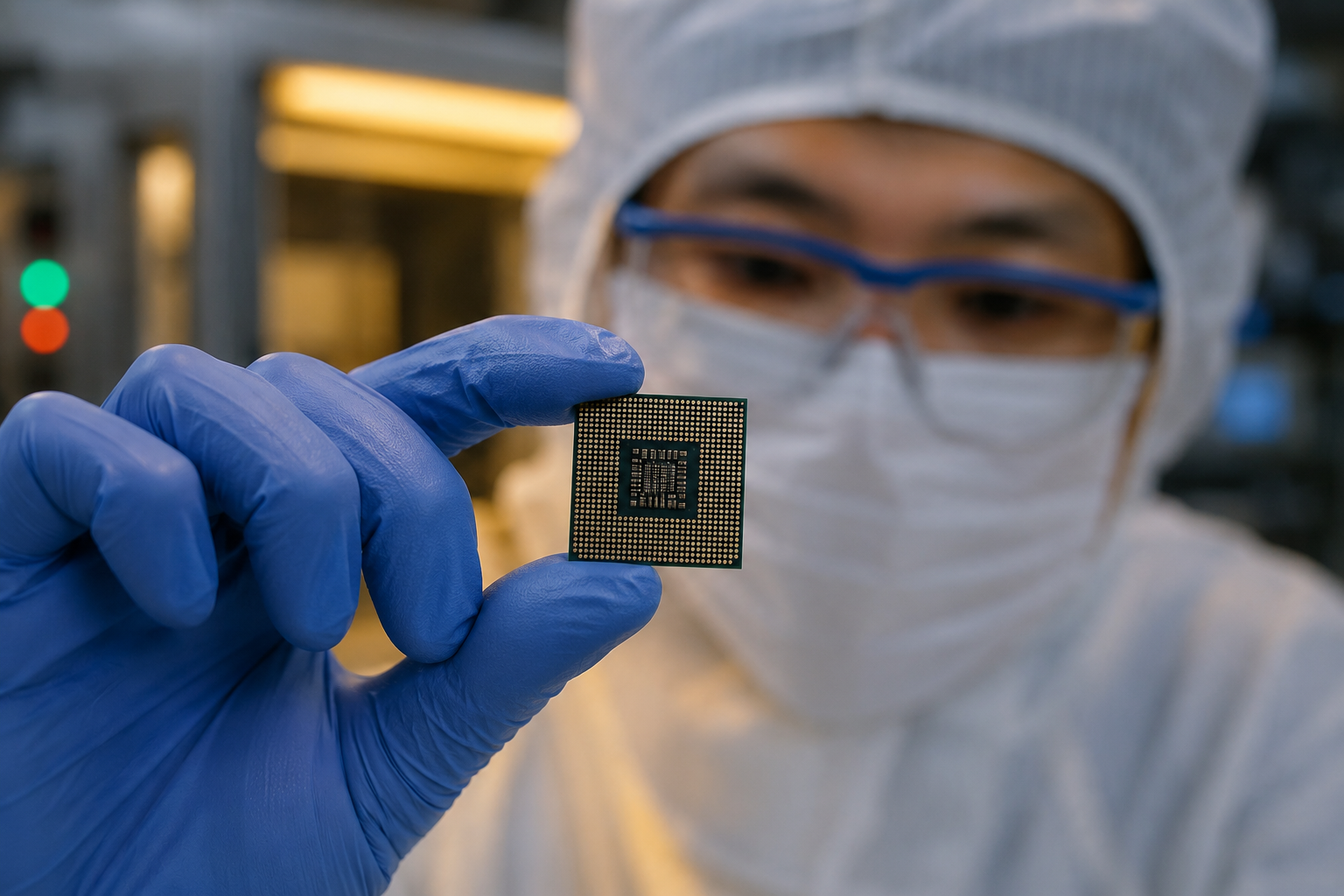
Oil gave the market room. Chips took it back.
Oil dropped 4.41% to $78.97. The 10-year yield eased to 4.60%. Gold fell 1.27%. The euro firmed to 1.139.
That is the surface.
Underneath, this was not a broad risk-on day.
It was rotation.
Sherwin-Williams (SHW) jumped 8% after better-than-expected Q2 results. Coca-Cola (KO) gained nearly 5% after beating estimates and raising its full-year outlook.
Health care and financials caught the bid. XLV and XLF hit record highs.
Tech did not.
SMH fell more than 3% for a fourth straight decline. Micron (MU) dropped about 10%. AMD (AMD) fell 8%. The chip tape stayed broken.
Why Nvidia is Investing in the "Energy Cube"
As AI's demand for electricity explodes, Nvidia is making moves in a surprising new area.
The company recently partnered with Los Alamos National Laboratory and backed a project tied to the technology known as the "Energy Cube."
One tiny stock sits at the center and a major government catalyst arriving in August could bring it into the spotlight.
The oil relief worked. The AI relief did not.
WTI fell below $79. Brent dropped toward $83 after Iran discussed the Strait of Hormuz with Saudi Arabia and Oman.
That is the market’s best-case path for now.
No new oil spike. No fresh route shock. No immediate inflation impulse.
Prediction markets moved that way too. A U.S.-Iran two-week pause by July 31 sits at 60%. August 14 is 70%. August 31 is 75%.
But the Strait is still not fixed. Hormuz traffic normal by August 31 sits at 14%. September 30 is 26%. December 31 is 56%.
The morning asked whether oil could give the Fed room.
The close said yes.
But only on the macro side.
The Relief Gap
Oil gave the tape an opening. Chips did not walk through it.
The memory shock became the market’s real problem.
Samsung’s worst day since 2008 and the Kospi circuit breaker were not just Asia stories. They were price discovery.
China’s ChangXin Memory debut changed the memory supply question. Reports that China is developing its own deep ultraviolet lithography machines added pressure on the equipment moat.
That is why ASML (ASML), Micron, AMD, and the chip chain are trading like the problem is inside the buildout.
Nvidia already fell nearly 5% Monday. SanDisk (SNDK) already dropped 11%. Today added another leg.
This is not oil.
This is the AI trade losing scarcity.
The Scarcity Break
The market can forgive expensive AI if supply stays tight. It has a harder time paying for scarcity once memory starts printing lower prices.
Navellier Warns: This Could Leapfrog Elon's SpaceX IPO
Elon Musk could take SpaceX public in 2026, at an estimated $1.75 trillion valuation. The IPO would include Elon's AI model, Grok. But according to Louis Navellier, a radical new AI model will launch this year… over 1,000 times more powerful than Elon's. And the company behind it could outperform SpaceX in the process.
Click here for full details (including Louis' new pick — free).
This ad is sent on behalf of InvestorPlace Media at 1125 N. Charles Street, Baltimore, Maryland 21201. If you're not interested in this opportunity, please click here.
The Fed sits down with less oil pressure and more market stress.
The decision lands Wednesday at 2 p.m. Warsh speaks at 2:30 p.m.
Polymarket prices July no-change at 72.1%. A 25 basis point hike sits at 24.9%. A cut is gone.
September is the live meeting. A 25 basis point hike sits at 56%. No-change is 36%. October no-change sits at 61%, with a 25 basis point hike at 25%.
Oil falling should have eased that path more.
It did not.
The reason is simple. Warsh is not walking into one clean shock. He is walking into falling oil, a chip crash, a divided Fed, and a market that wants clarity.
The WSJ reported that Warsh’s broad review of the Fed’s framework and messaging is already creating internal resistance. Christopher Waller reportedly challenged the outside-panel review before the June meeting.
The Framework Fight
Warsh wanted a tighter Fed voice. The market wants a clearer one. Wednesday tests both.
Prediction markets hit another rule fight.
A coalition of 44 state attorneys general told the CFTC it has no authority over sports prediction markets. The states argue sports event contracts should be treated as gambling under state law, not federal commodities products.
That keeps the Kalshi fight alive.
The CFTC wants federal authority. States want control. Court rulings are mixed. A Michigan judge blocked Kalshi sports markets, while a Minnesota federal judge temporarily blocked a state ban.
Even CME Group (CME), while working with FanDuel, warned that the CFTC’s definition of gaming could overreach.
The Rulebook Split
Prediction markets are becoming market data. Regulators still cannot agree what market they belong to.
He predicted the 2008 financial crisis…
He predicted Trump’s election in 2016….
He even predicted the rise of COVID-19 writing:
“The chance we don’t have something on the scale of a national pandemic in the next few years is near zero”
That was three months before the first reported case.
If he’s right again, God Bless America…
Because this crisis will be tectonic in scale…and it's going to begin with the bubble popping in AI.
Tuesday gave the market a clean filter.
If oil was the only problem, the Nasdaq should have rallied.
It did not.
WTI fell more than 4%. The 10-year eased. The VIX dropped. The Dow rallied. Old-economy earnings worked.
And chips still sold.
That means the tape is separating two trades.
The macro trade likes cheaper oil. The equity leadership trade hates lower memory scarcity.
Those are different signals.
One helps the Fed. One hurts the AI premium.
The market can rotate around that for a day. It cannot ignore it if the chip unwind keeps spreading into Microsoft (MSFT), Meta, Apple (AAPL), and Amazon (AMZN).
The Rotation Test
A Dow rally can hide an AI reset for one session. It cannot rebuild the Nasdaq’s leadership by itself.
The close answered the morning with a split verdict.
Oil handed the Fed room. Chips took the tape’s room away.
What is priced: a July hold, falling oil, a longer U.S.-Iran pause, and rotation into health care, financials, and old-economy earnings.
What is not priced: September hike odds staying above 50%, memory weakness cutting AI capex guidance, China’s lithography push becoming real, or sports prediction markets losing the federal-rule fight.
The Fed answers tomorrow.
Meta and Microsoft answer after that.
Oil already answered today.
Memory did too.
Capital moves early. Coverage catches up. The gap between the two is worth watching.
