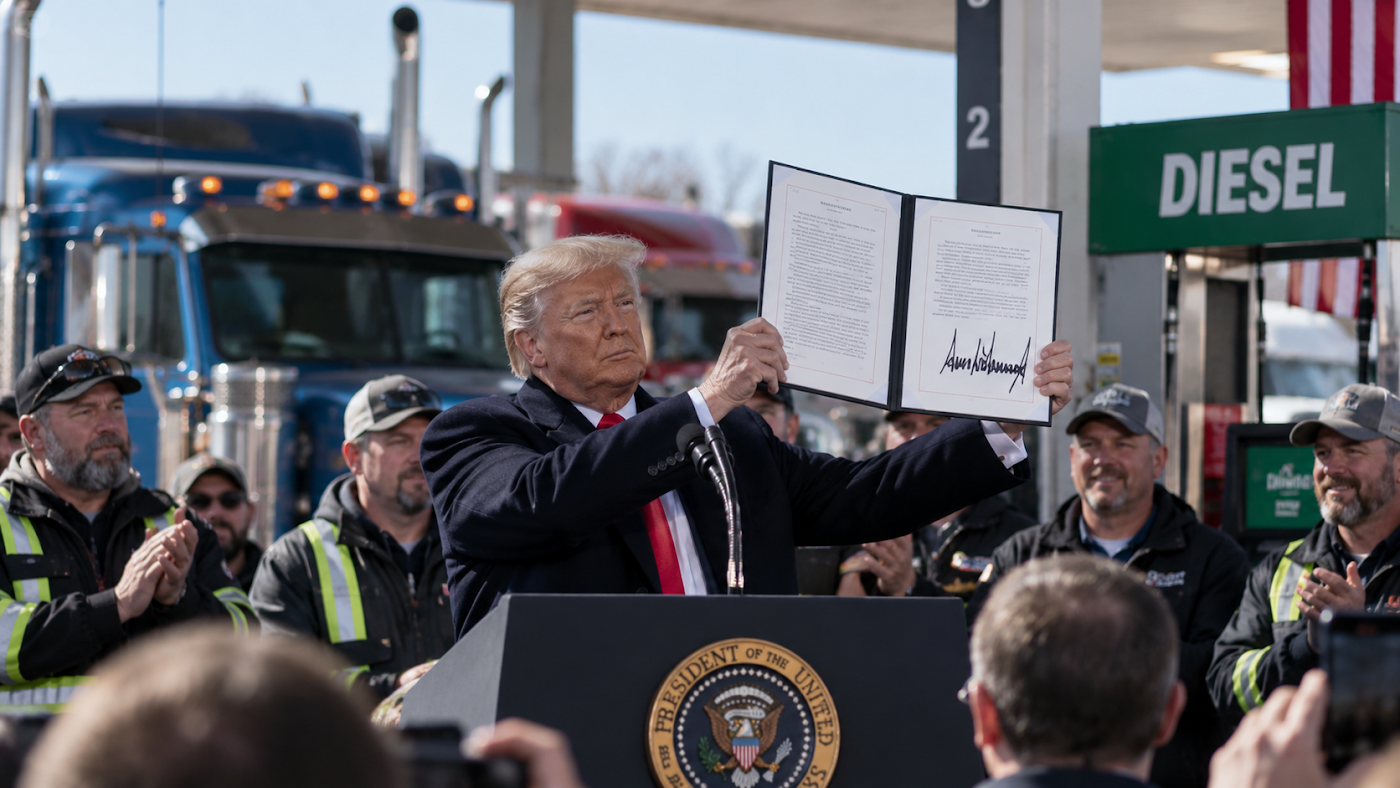
THE DAILY PULSE Tuesday opens with a small equity bid and a large bond problem.S&P 500 futures rose 0.25%. Dow futures gained 0.48%. Nasdaq-100 futures added 0.26% after U.S. stock futures moved higher following Monday’s Nasdaq record. The screen looks easier than the rate book. The 10-year yield eased to about 5.281%. The 30-year fell to about 5.637%. The 2-year slipped to about 4.816%. That is relief from Monday’s highs, not a reset. Monday’s session proved the point. The Nasdaq hit a record while bond yields also climbed. Nvidia, Microsoft and Meta carried the tape. The long end still charged more for time. Prediction markets show where the pressure sits. A 30-year yield above 5.70% before 2027 is 86%. Above 5.80% is 66%. Above 5.90% is 41%. A 6.0% touch is 25%. The 10-year book is smaller but still firm. A 5.4% touch sits at 62%. A 5.5% touch sits at 44%. Traditional markets are buying lower yields this morning. Prediction markets are still pricing a long-end auction and inflation problem. This is where prediction markets offer a lens traditional indicators do not. PREMIER FEATURE Watch What the Institutions Are Doing — Not What They're Saying.Bank of America increased its stake in one small gold company by 139%. Jane Street — one of the most sophisticated trading firms alive — by 159%. Millennium by 122%. One value fund, Kopernik Global, made it their single largest holding — owning roughly 8% of the entire company. The company doesn't even mine. It owns the rights to an 88 million ounce deposit — one of the largest on earth — with government-built roads, power already running to the property, and permits that never expire. Market cap: ~$4 billion. Value of the metal in the ground at today's prices: hundreds of billions. The institutions did this math quietly, over months. You get to do it this afternoon. Name, ticker, and the full file here THE LEAD SIGNAL The lead signal is that the 30-year is now carrying the risk the Fed book no longer owns.October is not the main fight anymore. CME pricing shows a hold near 78%, and the 2-year is trading below the stress seen in the long end. That fits last week’s weak payrolls and Monday’s steady short rate. The long end is different. Treasury yields eased Tuesday, but the 10-year had just reached its highest level since April 2002, and the 30-year touched levels last seen in May 2002. Monday’s ISM services report did not show a clean slowdown. The headline index held at 54.9, and the prices index rose to 74. The market is not pricing a faster Fed. It is pricing more expensive time. That is why the 30-year ladder matters. A 5.80% touch at 66% and a 6.0% touch at 25% say investors are still asking for term premium, even as the next meeting looks paused. The Long-Bond Toll The Fed pause lowers one cost. It does not lower the price of duration. A 2-year near 4.82% and a 30-year near 5.64% is not a normal relief trade. It says the market trusts the Fed to wait, but not the fiscal, inflation and supply backdrop around long bonds. THE ARCHITECTURE Diesel relief moved from talk to policy.President Trump signed an executive order allowing broader highway use of red-dyed diesel through the end of 2026. The order defers the federal diesel tax, which is 24.4 cents per gallon, and tells the IRS not to impose some penalties during the relief period. The White House says truckers could save more than $100 per fill-up in states that match the move. That matters because diesel prices moved above $6 per gallon in September and have become a political version of the same inflation problem bonds are pricing. Kalshi’s gas book shows a narrow pump range. U.S. gas above $4.3200 this week sits at 79%. Above $4.3400 is 51%. Above $4.3600 is 40%. The CPI book is wider. Headline CPI above 0.4% in September sits at 89%. Above 0.5% is 61%. Above 0.6% is 16%. Core CPI above 0.2% sits at 39%. The Tax Cut Channel The diesel order lowers the tax layer, not the supply layer. That helps truckers now, but it does not create refining capacity or reopen risky routes. If the pump falls slowly and CPI stays firm, the long end will treat the policy as relief with an inflation floor underneath it. FROM OUR PARTNERS People paid $8,000… yours for FREE
Some people have paid $8,000 to be in the room with Luke Lango in Las Vegas. But he believes the new Elon venture he's uncovered (not space or AI) is so big that EVERYONE needs to know about it. See how to get in while we're still early here. This ad is sent on behalf of InvestorPlace Media at 1125 N. Charles Street, Baltimore, Maryland 21201. If you're not interested in this opportunity, please click here. THE CROSS-CURRENTS The route story improved in one strait and stayed fragile in another.Oil fell Monday as stronger regional crude exports kept easing the war premium. Brent traded near $100 and WTI near $88.63 on Tuesday morning. That helped futures and lowered near-term fuel stress. The Red Sea map is changing. Yemeni government forces said they retook territory around Mokha, a strategic port near the Bab el-Mandeb route. The Houthis dispute the claim, and Reuters could not verify the full extent of the gains. Prediction markets price that caution. Perim Island no longer under Houthi control by October 31 sits at 11%. By December 31 it is 37%. Hormuz is still not normal either. Traffic returning to normal by December 31 sits at 19%. That means oil can stay lower while route risk stays alive. The market is not pricing a full reopening. It is pricing workarounds, escorts and contested control. The Route Premium Flows improved before the map cleared. That lowers crude, but it keeps freight, insurance and fuel risk in the system. The market can take down the oil spike and still leave a premium in routes that remain military problems. THE FORETELL LENS Prediction markets are useful today because they show three different relief trades moving at different speeds.The stock screen shows the fastest relief. Futures rose after Monday’s Nasdaq record and lower yields. The Fed book shows the second relief. October looks paused, and the 2-year eased. The long-end book does not show the same relief. The 30-year at 5.80% is 66%, and 6.0% is 25%. The 10-year at 5.5% is 44%. The fuel book sits in the middle. Gas above $4.34 this week is almost a coin flip at 51%, while headline CPI above 0.5% is 61%. That says the pump may stop rising faster than the inflation story does. The route book adds the last layer. Perim by year-end is 37%. Hormuz by year-end is 19%. Physical flows can improve before legal or military control does. The Three-Speed Tape Stocks are pricing relief first. The Fed book is pricing it second. Long bonds and routes are slower to move. That is the tension for Tuesday. The screen can rally while the contracts keep asking whether relief is durable. PARTNER SPOTLIGHT He predicted the 2008 financial crisis…He predicted Trump’s election in 2016…. He even predicted the rise of COVID-19 writing: “The chance we don’t have something on the scale of a national pandemic in the next few years is near zero” That was three months before the first reported case. If he’s right again, God Bless America… Because this crisis will be tectonic in scale…and it's going to begin with the bubble popping in AI. Click here to view his latest warning FINAL FRAME Tuesday begins with lower yields, higher futures and a cleaner fuel policy headline.But the pressure has not left the system. The 30-year still prices 5.80% at 66%. Gas is still near this week’s strike ladder. CPI risk stays firm. Mokha and Hormuz still sit below normal. Fed minutes land Wednesday with the long end already near 24-year highs. What is priced: a 5.80% 30-year at 66%, a 6.0% 30-year at 25%, a 5.5% 10-year at 44%, gas above $4.34 this week at 51%, and headline CPI above 0.5% at 61%. What is not priced: the 30-year auction stress spreading into equities, diesel relief failing to reach consumer prices, Houthi control lasting into year-end, or Fed minutes pushing back on the pause trade. Futures got the bounce. The long end still owns the test. Capital moves early. Coverage catches up. The gap between the two is worth watching. 3 Market Signals Most Investors Aren't WatchingThe headline is usually the last place the story shows up.
By the time everyone is talking about a stock… the signals underneath it may have been changing for weeks. • Institutional money moves. • Options activity changes. • Management confidence shifts. • Fundamentals improve, or quietly begin telling a different story. That’s exactly what our analysts found in three stocks where the evidence stopped agreeing with itself.
And in all three cases, the story is still developing. See the 3 Stocks, Get the Free Report → | 


