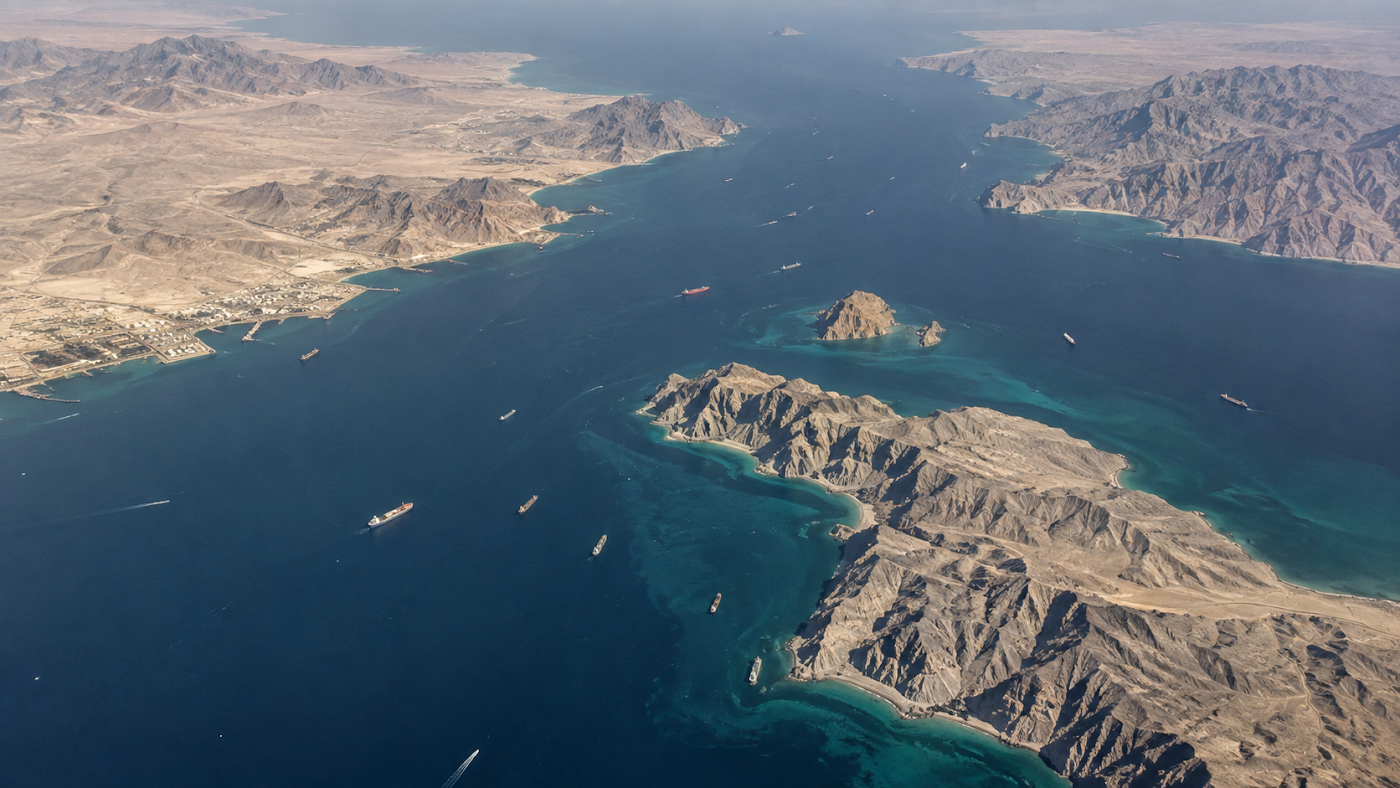
Tuesday opens with the rally pausing, not reversing.S&P 500 futures were near flat. Nasdaq-100 futures gained 0.1%. Dow futures rose about 112 points after Monday’s AI-led rally pushed the Nasdaq to a record close. Oil kept moving lower. Brent fell near $98. WTI dropped toward $93 after Iran offered to reopen the Strait of Hormuz within seven days if the U.S. eases military pressure and lifts its blockade on Iranian ports. That changed the tape because Hormuz is the larger route, not only the Saudi bypass. The 10-year yield eased to 4.943%. The 2-year sat near 4.741%. The 30-year moved near 5.272%. Lower oil and lower yields are keeping the growth bid alive. Prediction markets moved too. The Saudi East-West pipeline restarting by September 22 jumped to 33%. September 30 moved to 74%. October 31 moved to 94%. Traditional markets are buying the diplomacy headline. Prediction markets are repricing the repair clock. PREMIER FEATURE The Market Is Already Looking Beyond the Mag 7The Magnificent Seven reshaped the market, but leadership rarely stays concentrated forever. As these giants mature, history shows leadership rotates toward companies with growing cash flows and scalable business models. Our analysts believe that shift is already underway. That’s why they created These 7 Stocks Will Be Magnificent in the second half of 2026, a FREE report highlighting the next group positioned to step into market leadership. Download your free report today. The lead signal is that the route book finally moved.Monday’s letter said the screen had relief, but the route still needed repair. By Tuesday morning, that gap narrowed. The Saudi East-West pipeline restart book shifted hard. September 22 moved from 2% to 33%. September 30 rose from 31% to 74%. October 31 moved from 77% to 94%. That is the market saying the workaround may be turning into a repair path. The crude market moved first. WTI dropped toward $93. Brent fell under $100 after Iran’s Hormuz proposal. But the pipeline book is the cleaner signal because it asks whether the Saudi route itself comes back, not just whether barrels can find another path for a few days. The difference matters for inflation. A lower barrel helps the screen. A working route can lower the floor. The Route Repricing Crude moved on diplomacy. Pipeline odds moved on repair. The second signal matters more. The bigger oil question shifted from Saudi Arabia to Hormuz.The Strait of Hormuz handles about 20% of global oil and liquefied natural gas trade. Vessel traffic has fallen sharply during the conflict, with reports showing only two large commercial ships in a day versus roughly 125 daily crossings before the war. That is why a reopening offer moved crude. It also changed how markets read Saudi risk. If Hormuz can reopen, Saudi Arabia does not need every barrel to move through Oman workarounds or the damaged East-West pipeline. The Bab el-Mandeb book shows the other side. An effective closure by September 30 sits at 1%. October 31 sits at 11%. December 31 sits at 18%. The market is not pricing a Red Sea shutdown today. It is pricing a route system that is healing at different speeds. The Strait Clock Hormuz is the large door. Saudi repairs decide how durable the relief becomes. FROM OUR PARTNERS The Man Who Called Nvidia Before It Soared 1,000% Issues New Elon Musk BUY Alert
Luke Lango was ranked America's #1 stock picker in 2020. He was mentored by two hedge fund billionaires from the Soros network and trained at Caltech. His readers have had the chance to see gains as high as AMD +8,500%... Nvidia +5,000%... Tesla +3,500%... Palantir +1,000%... and Apple +890%. Now he's releasing his next big pick. This ad is sent on behalf of InvestorPlace Media at 1125 N. Charles Street, Baltimore, Maryland 21201. If you're not interested in this opportunity, please click here. Rates are easing, but the Fed path is not gone.The 10-year slipped to 4.943% as oil fell. That is the clean part. Lower energy risk lowers inflation fear and gives equities room. The harder part is that the Fed still has to see proof. Chicago Fed President Austan Goolsbee warned about persistent service-sector inflation and said AI data-center investment could add to demand if construction spending pushes the economy beyond capacity. He also said expectations for peak inflation keep moving out, from late 2025 toward 2027. That connects oil, AI and rates. Oil relief can reduce one supply shock. AI capex can add another demand impulse. The Fed has to judge both after restarting hikes last week. The 10-year path book shows the same split. Polymarket prices the 10-year falling below 4.7% before 2027 at 53%. Below 4.6% sits at 47%. Below 4.5% sits at 33%. Below 4.4% sits at 26%. The Yield Break Test Yields eased with oil. They still need softer demand to break lower. Prediction markets are useful today because they separate a headline from a path.The headline is simple. Iran offered to reopen Hormuz within seven days if U.S. pressure eases. Oil fell. The path is less simple. The Saudi East-West pipeline restart by September 22 is 33%, by September 30 is 74%, and by October 31 is 94%. Bab el-Mandeb closure by September 30 is only 1%, while December 31 sits at 18%. Those contracts tell different stories. One says the main global strait may reopen. One says the Saudi repair timeline improved. One says the Red Sea risk has not disappeared, but is not the base case. The China book adds another timing layer. A U.S.-China tariff agreement by December 31 sits at 91%. That follows trade and AI talks ahead of the Trump-Xi summit, where the two sides discussed AI, critical minerals and a possible incident-notification channel. Prediction-market regulation is also moving. Polymarket is pushing European and UK regulators to treat contracts as financial products rather than gambling products. That would shift the rulebook, but no broad EU or UK change has been announced. The Contract Stack One headline moves the price. Several clocks show whether the move can hold. PARTNER SPOTLIGHT Navellier Warns: This Could Leapfrog Elon's SpaceX IPO
Elon Musk could take SpaceX public in 2026, at an estimated $1.75 trillion valuation. The IPO would include Elon's AI model, Grok. But according to Louis Navellier, a radical new AI model will launch this year… over 1,000 times more powerful than Elon's. And the company behind it could outperform SpaceX in the process. Click here for full details (including Louis' new pick — free). This ad is sent on behalf of InvestorPlace Media at 1125 N. Charles Street, Baltimore, Maryland 21201. If you're not interested in this opportunity, please click here. Tuesday begins with relief becoming more credible, but still conditional.Oil is lower. Futures are steady. The 10-year is below five. Pipeline odds improved. Hormuz diplomacy entered the tape. China talks still price a high chance of a tariff deal. What is priced: Saudi pipeline restart by September 22 at 33%, September 30 at 74%, October 31 at 94%, Bab el-Mandeb closure by September 30 at 1%, a U.S.-China tariff agreement at 91%, and the 10-year below 4.7% before 2027 at 53%. What is not priced: Hormuz talks failing, the Saudi route missing September, oil snapping back above $100, AI capex keeping demand hot, or prediction-market regulation limiting growth outside the U.S. The screen got lower oil. The route clock finally moved. Capital moves early. Coverage catches up. The gap between the two is worth watching. 3 Stocks at a Major Turning PointSomething unusual is happening beneath the surface of three widely followed stocks.
In each case, the fundamentals are saying one thing... while institutional activity, management signals or the options market are saying something else. That kind of disagreement can matter. Because when the evidence stops lining up, the next move in the story often comes down to a handful of signals most investors never think to watch. Our new FREE Market Tell Special Report breaks down three of these situations, and shows you exactly what we’re watching next. Get the Free Report: 3 Stocks at a Major Turning Point → |
|


