


Brent topped $100. Nasdaq fell 2.5%. Alphabet raised capex again. Tesla dropped 14%. September now prices a hike.
The tape got the answer before the Fed did.
The Nasdaq fell 2.15%. The S&P lost 1.2%. The Dow dropped 1%. The VIX jumped 12.3% to 18.69.
WTI surged 6.25% to $92.30. Brent moved above $100. The 10-year yield rose to 4.70%. Gold fell 2.4%. The dollar continued to show strength.
Two risks hit at the same time.
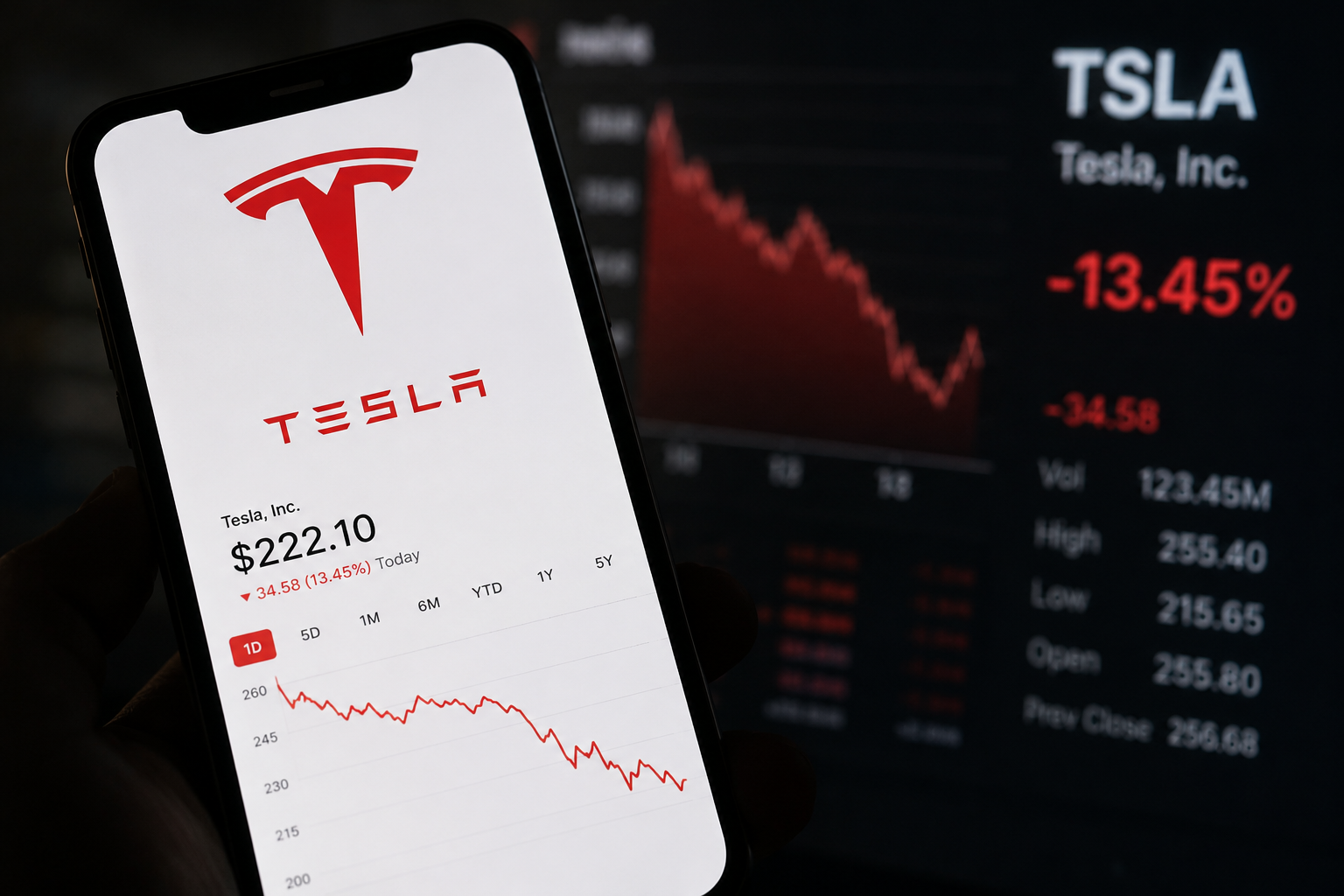
The first was AI spending. Alphabet (GOOG) fell almost 7% after raising 2026 capex guidance range up to $195 billion to $205 billion. Tesla (TSLA) plunged 14.5% after missing earnings and posting negative free cash flow.
The second was oil. Houthis claimed attacks on Saudi tankers in the Red Sea. Trump threatened major military punishment and more strikes on Iran.
Growth lost the cash flow argument. Oil won the macro argument.
The Market Is Going to Crash And You Are Unprepared.
The problem isn't your investments — it's that you're making one giant directional bet on the market staying up.
A passive portfolio layer of 12 uncorrelated algorithms that profit from market movement, not market direction — and that has historically outperformed the S&P by roughly 5x since 2020.
Discover the algorithms that capitalize on market crashes for you.
Big Tech beat and still broke.
Alphabet delivered the growth. Search rose 17%. Cloud grew more than 80%. Those are not weak numbers.
But the spending line took over.
Capex guidance moved higher again, and free cash flow turned negative. Investors did not sell because AI demand disappeared. They sold because the cost of capturing that demand moved faster than cash.
Tesla gave the same signal from another angle. Revenue rose more than 25%, but profit missed. Free cash flow went negative for the first time in more than two years.
That matters because these were the first major megacap AI reports.
They did not calm the market. They changed the question.
The Cash Flow Test
The market is no longer asking whether AI demand is real. It is asking who funds it, how long it burns cash, and when it pays back.
Oil turned the Fed path harder.
Brent broke above $100. U.S. crude moved above $90. WTI closed at $91.75. That moved straight into rates.
The 10-year topped 4.70%. The 2-year rose above 4.36%, its highest level in 17 months.
July is still not the main fight, but it is no longer clean. Polymarket prices July no-change at 73.9%. A 25 basis point hike sits at 25.7%. A cut is below 1%.
September now prices the move. A 25 basis point hike sits at 51%. No-change is 42%. October no-change is 55%, while a 25 basis point hike is 32%.
The Fed is in blackout. Warsh cannot soften the tape.
The Rate Wall
Oil did not just hit energy stocks. It lifted the cost of money under every cash-burning growth story.
The Man Who Called Nvidia Before It Soared 1,000% Issues New Elon Musk BUY Alert
Luke Lango was ranked America's #1 stock picker in 2020. He was mentored by two hedge fund billionaires from the Soros network and trained at Caltech. His readers have had the chance to see gains as high as AMD +8,500%... Nvidia +5,000%... Tesla +3,500%... Palantir +1,000%... and Apple +890%. Now he's releasing his next big pick.
This ad is sent on behalf of InvestorPlace Media at 1125 N. Charles Street, Baltimore, Maryland 21201. If you're not interested in this opportunity, please click here.
The war risk widened again.
The U.S. launched more strikes on Iran. Iran attacked countries hosting U.S. bases. Trump promised major military punishment after Houthis hit Saudi oil tankers.
That took the market beyond one chokepoint.
Hormuz was already broken enough. The Red Sea is now part of the same supply map. The concern is not only whether barrels move today. It is whether insurance, freight, and pass-through costs move for weeks.
Prediction markets show no quick fix.
An effective U.S.-Iran ceasefire by July 31 sits at 17%. August 14 is 34%. August 31 is 52%.
A final nuclear deal by September 30 is 14%. December 31 is 32%.
Hormuz traffic normal by August 31 is 12%. September 30 is 22%. December 31 is 50%.
The Route Stack
Oil is no longer pricing a headline. It is pricing multiple routes that can fail at once.
Prediction markets are moving into harder assets and harder questions.
Kalshi is considering copper perpetual futures after pushing into precious metals. Copper matters because it sits inside AI data centers, power grids, computing infrastructure, and industrial demand.
That is the point.
If AI capex is the story, copper is not a side market. It is part of the buildout. A 24/7 leveraged copper product turns the AI infrastructure trade into a retail macro product.
Kalshi is also testing another line through sports.
More than $245 million has traded on where LeBron James will play next season, including more than $200 million on Kalshi alone. The NBA wants markets tied to player moves, injuries, discipline, and officiating banned.
The risk is inside information. LeBron’s decision will be known by a small circle before the public. A mistaken Miami Heat YouTube post already moved Miami’s implied odds from about 37% to 47%.
The Integrity Test
Prediction markets are scaling into commodities and private decisions. Both create liquidity. Both create new rule problems.
On September 8th, a powerful new law signed by President Trump
will trigger a radical shift in America’s money system...
When a small group of private companies — not the Fed — will perform a major mint of a new kind of money.
And those who act before this new system fully kicks in could see gains as high as 40X by 2032.
But those who fail to prepare will be blindsided by this sea change to the U.S. dollar.
Go here now for the details — before the September 8th mint hits the market.
Thursday was the day the cost stack caught the growth trade.
Alphabet showed demand. It also showed cash burn.
Tesla showed revenue. It also showed margin stress.
Oil showed geopolitical risk. It also showed inflation risk.
Rates showed the market’s answer.
The old trade needed three things. AI growth had to keep accelerating. Oil had to stay a side issue. The Fed had to remain patient.
Thursday challenged all three.
AI growth came with higher capex. Oil broke $100 on Brent. The Fed hike path moved into September.
That is why the selloff was sharp.
The Cash Compression
The market can pay for growth. It can pay for risk. It struggles when growth, oil, and rates all demand cash at once.
The close changed the week.
Big Tech did not fail because demand vanished. It failed because cash flow did. Oil did not rise because one headline hit. It rose because the supply map widened.
What is priced: a July Fed hold, September hike risk, heavy AI capex, and no quick Hormuz recovery.
What is not priced: Brent staying above $100, more megacaps raising spending, Kalshi turning AI inputs like copper into 24/7 leverage, or LeBron-style markets forcing sports leagues into a bigger fight.
The morning asked whether strong growth could carry a stock into a hawkish Fed.
The close answered.
Not when the barrel and the capex line rise together.
Capital moves early. Coverage catches up. The gap between the two is worth watching.
