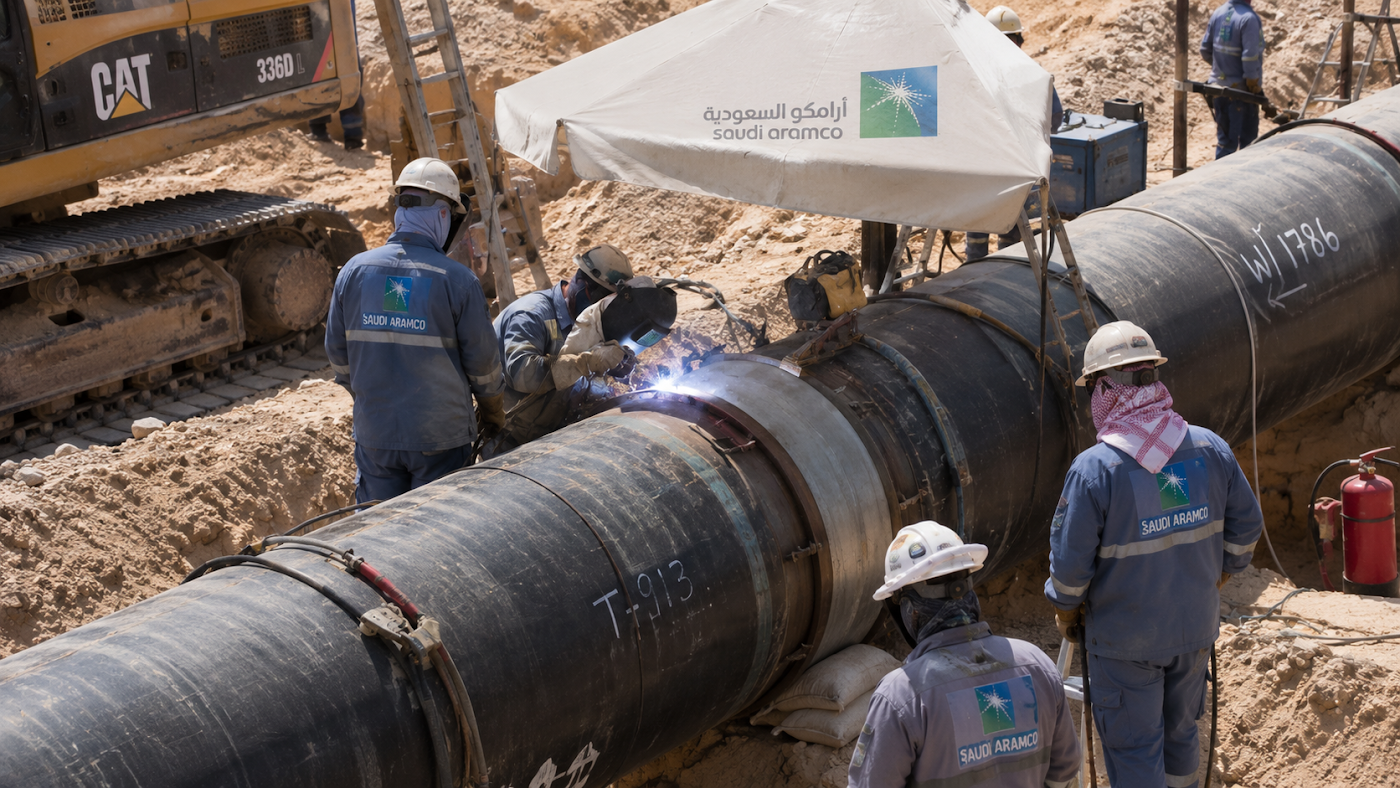
THE DAILY PULSE Tuesday gave the market relief with less force than Monday.The Nasdaq rose 0.45%. The S&P was flat while the Dow slipped 0.39%. The VIX fell 4.44% to 14.21. Oil fell another 0.60% to $95.21, but the 10-year yield rose to 4.97%. Gold gained 0.56%. The dollar was slightly higher on the session. That's the softer tape. The split underneath it didn't go anywhere. Technology carried the market again, and not much else did. The Dow fell. The S&P barely moved. Banks and cyclicals lagged while AI names kept the Nasdaq bid alive. Crude stayed under $100 on a Hormuz opening and stronger Saudi flows. The route books weren't as convinced. A Saudi East-West pipeline restart by September 30 sits at 66%, October 31 at 87%. The market kept buying relief. Prediction markets kept asking which route actually reopens. PREMIER FEATURE Wall Street Owns 88% — Yet Most Investors Don’t Know the NameInstitutions already control 88% of this little-known company. BlackRock owns roughly 32 million shares. Vanguard owns about 48 million. And management authorized a 40-million-share buyback. One man believes Wall Street may see something Main Street has missed. Click here to learn more THE LEAD SIGNAL Monday's drop looked like a clean break. Tuesday held it, with thinner conviction behind it.WTI stayed near $95. Brent stayed near $98.50, which keeps inflation pressure below last week's and gives equities room to work. The route books went the other way. September 30 restart odds fell from 74% this morning to 66%. October 31 slipped from 94% to 87%. That's not a reversal. It's a reminder that the market is buying price relief ahead of repair certainty. Hormuz says the same thing on a longer horizon. Kalshi prices traffic back to normal at 35% before April 2027, 46% before July 2027, and 55% before January 2028. The Route Discount Oil held the break and the repair odds went the other way. Exporters found enough room around the outage to keep crude under $100, which is a detour working, not a route reopening. Those restart odds fell over the same session the price held. That's a discount borrowed against a fix the market now rates less likely than it did this morning. THE ARCHITECTURE The rate market didn't take the oil move at face value.The 10-year rose to 4.97% on a session when crude fell again. That's the tell. For two weeks the long end has moved with the barrel, and Tuesday it stopped. The Fed restarted hikes last week and Warsh's framing left October live. Goolsbee warned that service inflation is still sticky, and that AI data-center spending can add demand if construction pushes the economy past capacity. That's the lane. Cheaper oil helps the inflation math. It does nothing about a services economy running hot or a capex boom adding demand faster than capacity. A yield near five keeps the strain on mortgages, credit and AI capex regardless of what a barrel does. The Yield That Didn't Follow Crude fell and the long end rose anyway. For two weeks those two moved together, which made the oil trade look like an inflation trade. Tuesday broke that link, and what's left is a bond market pricing something cheaper energy can't fix. Watch whether the ten-year keeps rising on lower oil. That's a different problem than the one the equity tape is celebrating. FROM OUR PARTNERS 
Could This Stock Be “Trump’s Next Big Buy”?Jim Rickards believes the Trump administration is about to take a direct stake in a tiny $2 stock. The Trump administration has taken a direct stake in MP Materials, Lithium America, Trilogy Metals, and USA Rare Earth. Each time, shares sprinted higher. Click here to see why Jim believes this one is next. THE CROSS-CURRENTS China gave the tape a second leg to stand on.Polymarket now prices a U.S.-China tariff agreement by December 31 at 93%, up from 91% this morning. That fits a market pricing less friction into Thursday's Trump-Xi summit. The trade story runs straight into the AI story. Alibaba rose after unveiling a new AI chip and laying out data-center expansion plans. Shopify climbed on its integration with Meta's Muse AI agent. AI isn't only a U.S. chip trade anymore. It's a trade story, a cloud story, a supply-chain story and a diplomacy story at once. Which is why the Nasdaq led while the Dow fell. The market isn't buying everything. It's buying what's tied to AI and lower tariff risk. The Selective Bid Trade relief lifted growth names first and left the rest behind. Lower tariff risk is worth more to a company selling compute into China than to a bank or an industrial, which is why Alibaba and Shopify moved while the Dow slipped. That's a bid with a specific address, not a broad one. The rest of the tape still needs its own catalyst rather than a borrowed one. THE PREDICTION MARKET LAYER Prediction markets moved deeper into finance while the rulebook stayed put.Kalshi asked the CFTC for permission to offer margin on selected contracts. Eligible institutional traders could use borrowed funds on approved markets instead of fully collateralizing every position. Sports, culture and mention markets would stay fully funded. Access would be limited to self-clearing members carrying capital requirements, with collateral rising as contracts approach settlement. That's a real change in what these products are. Bernstein's forecast points the same direction. The firm sees annual volume climbing from roughly $410 billion in 2026 to $10 trillion by 2035, with crypto, equity and commodity contracts taking a much larger share. The Leverage Step Prediction markets want institutional depth, and margin is the price of admission. Fully funded contracts look like probability tools, while leveraged ones look like macro instruments with a settlement date. Kalshi's own filing draws the line by product, keeping sports and mention markets fully collateralized. The category is splitting into two businesses, and only one of them is asking for borrowed money. PARTNER SPOTLIGHT Major Buy Alert Issued 
Keith Kaplan has invested $17 million into his own AI research and tools. He's built a platform that 180,000 people worldwide use in the stock market. Now he says there's a handful of stocks you need to buy asap, to set yourself up for 1,000% potential returns in the near future. Here are the stocks you need to buy for the chance to profit. This ad is sent on behalf of TradeSmith at 1125 N. Charles Street, Baltimore, Maryland 21201. If you're not interested in this opportunity, please click here. THE FORETELL LENS The useful signal Tuesday wasn't one price. It was the distance between the books.Crude answered fastest. WTI near $95 says the immediate supply panic eased. The pipeline book answered slower and less kindly. September 30 at 66% and October 31 at 87% say the route is probably improving, not that it's cleared. Hormuz answered on a horizon most positions never reach. Traffic back to normal sits at 35% before April 2027, 46% before July 2027, and 55% before January 2028. Gasoline answered for the household. Kalshi prices U.S. gas above $4.46 this week at 68%, above $4.48 at 41%, and above $4.50 at 28%. Four books on one disruption, and only the fastest one is celebrating. The Slower Books Spot oil delivers relief and the slower books decide whether it reaches anyone. Pipeline odds, Hormuz traffic and gasoline strikes all price the same outage on longer horizons, and none of them moved with the barrel's conviction. That gap is the market hedging its own optimism. Until it closes, the Fed is reading a signal the market hasn't confirmed. FINAL FRAME Tuesday answered Monday with follow-through, not closure.Oil stayed lower. The Nasdaq rose again. China tariff odds improved. But the 10-year rose anyway, the Dow slipped, pipeline restart odds softened, and Hormuz traffic is still years out. What is priced: a September 30 pipeline restart at 66%, October 31 at 87%, a U.S.-China tariff agreement at 93%, Hormuz traffic normal before January 2028 at 55%, and gas above $4.46 this week at 68%. What is not priced: the pipeline missing October, Hormuz talks failing, gasoline staying sticky after crude falls, or margin turning prediction markets into a new leveraged risk channel. The price break held. The repair proof lagged. Capital moves early. Coverage catches up. The gap between the two is worth watching. 3 Market Signals Most Investors Aren't WatchingThe headline is usually the last place the story shows up.
By the time everyone is talking about a stock… the signals underneath it may have been changing for weeks. • Institutional money moves. • Options activity changes. • Management confidence shifts. • Fundamentals improve, or quietly begin telling a different story. That’s exactly what our analysts found in three stocks where the evidence stopped agreeing with itself.
And in all three cases, the story is still developing. See the 3 Stocks, Get the Free Report → |