


Wholesale prices were flat. The S&P topped 7,800. Cisco beat and fell. Hormuz traffic stayed near a three-month low.
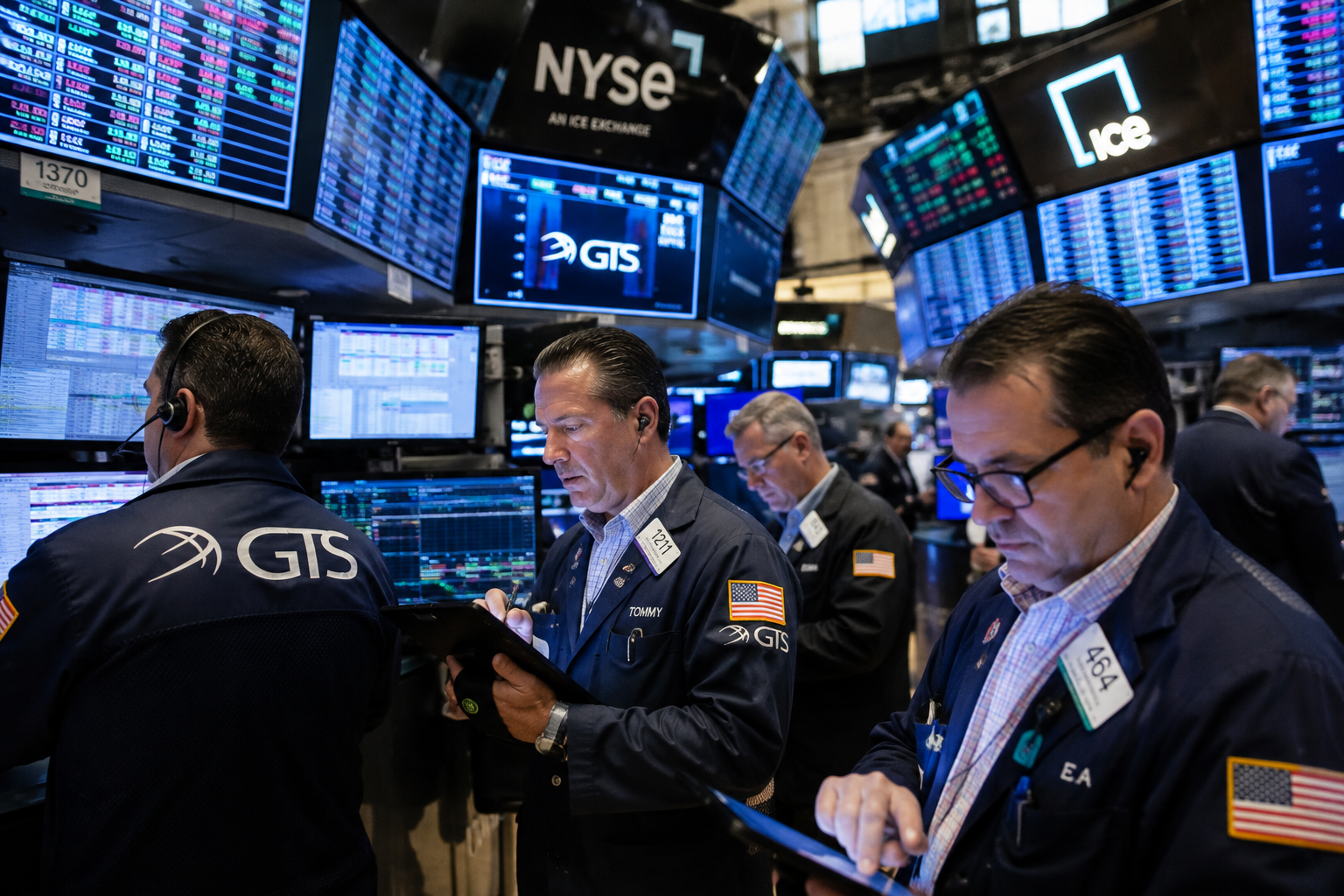
Inflation gave stocks another pass. Hormuz did not.
The Nasdaq rose 0.8%. The S&P gained 0.65%. The Dow gained 70 points. The VIX rose 0.55% to 14.63.
The 10-year yield fell to 4.65%. Oil dropped 2.5% to $81.10. Gold fell 1.19%. The euro held near 1.153.
That is the surface.
Underneath, Thursday was the cleanest version of the hold trade this week.
July PPI came in flat. Economists expected a 0.2% rise. Core PPI rose 0.2%, below the 0.3% forecast. That followed Wednesday’s in-line CPI and gave the Fed more room to wait.
Stocks took it. The S&P crossed 7,800 for the first time. The Nasdaq led again.
But the rally was not broad inside tech.
Cisco (CSCO) beat and fell. Cerebras dropped. AI winners kept separating from AI laggards.
The Big AI Story Nobody Knows
|

There's a website called RentAHuman.ai. Its tagline: "Robots need your body."
721,000 people across 100 countries have signed up.
And according to Alexander Green - the man who bought Apple under $1, Netflix at $1.62, Amazon under $2* - this is the clearest signal yet that Phase 2 of the AI supercycle has arrived. (Split adjusted prices)
He's identified three companies set to dominate this next phase.
Wholesale inflation cooled enough to move the Fed book.
The PPI print gave the market what CPI had started. Headline inflation was not hot. Core was better than feared. Oil moved lower on the day.
September no-change rose to 71%. A 25 basis point hike fell to 28%. October no-change sits at 71%, with a hike at 24%. December no-change is 69%, with a hike at 28%.
That is a real shift from last week.
The 10-year moved with it. It fell 4.7 basis points to 4.65%.
But this is still not a victory print. It is a patience print.
The Fed now has weak payrolls, soft CPI, and soft PPI. It also has oil above $80, gasoline risk, and Hormuz still blocked.
The Patience Trade
The data gave Warsh room to wait. It did not give him proof that the cost stack is gone.
The auction worry did not stop the equity bid.
Wednesday’s 10-year sale showed a changed buyer mix. Indirect bidders took 76.7%, down from 81.5% in July. The auction cleared at 4.683%, more than 10 basis points above July’s sale.
That was the morning’s warning.
Thursday answered with lower yields, not a clean all-clear. The long end eased because PPI came in soft and oil fell. But the funding issue remains.
The market still has to absorb Treasury supply while the Fed path is uncertain and the long bond sits near 5.2%.
Tuesday showed demand for three-year paper. Wednesday showed the 10-year needed more price. Thursday showed soft data can help.
The Duration Test
Treasury demand is still there. The question is how much yield it takes to bring it out.
Trump Just Executed a Bloodless Coup.
Nobody Noticed.
For the first time ever, a sitting U.S. President has effectively seized control of the world's most powerful financial institution.
Trump didn't just stack the Fed board.
He's about to weaponize it.
And when it starts on September 16…
A handful of little-known stocks could deliver 1,000%+ gains in 12-24 months.
Discover details on 3 stocks that could explode imminently — and get one FREE ticker symbol today.
Cisco showed the margin problem inside AI infrastructure.
Revenue rose 18% to $17.3 billion, ahead of expectations. Current-quarter revenue guidance came in at $18 billion to $18.2 billion, well above the $16.8 billion consensus.
Hyperscalers placed $4 billion of AI infrastructure orders in the quarter. Full-year AI orders reached $9.3 billion. Cisco expects hyperscaler revenue to nearly double to $7.5 billion in fiscal 2027.
The stock still fell over 8%.
The reason was not demand. It was the margin path. Adjusted gross margin slipped to 66.3% from 68.4%. Heavier AI hardware carries thinner economics.
Tuesday's Nvidia financing partnership answered the capital question at $500 billion. Wednesday's Cisco margin miss opened the profit question. AI infrastructure is now getting funded and repriced in the same week.
Super Micro Computer (SMCI) kept rallying. Meta (META), Micron (MU), and Netflix (NFLX) helped the Nasdaq. Cisco did not.
The Margin Split
AI orders are not enough anymore. The market wants to know how much profit the order keeps.
Hormuz remains the part oil cannot ignore.
Trump said the U.S. has total control of the Strait. Iran rejected that. Tehran said no vessel can transit without its permission.
Shipping data backed the risk. Kpler showed Hormuz vessel traffic near a three-month low, with the five-day average around 13 ships. Before the war, the daily average was about 130.
That is a 90% traffic loss.
Prediction markets are not buying a fast fix. Strait traffic normal by September 30 sits at 16%. A next round of U.S.-Iran peace talks by August 31 sits near 15%. By September 30, it is near 41%.
A U.S. announcement ending the Iranian blockade by October 31 sits at 73%. December 31 sits at 84%.
The Passage Deficit
The market can price an announcement by year-end. It is not pricing normal ships by next month.
The Closest Thing to a Virtual AI Monopoly Wall Street Is Ignoring
A little-known company is building what may be the closest thing to a virtual monopoly the AI era has ever seen.
Only 3...
Yet it beat Apple, Amazon, and the S&P 500 combined...
While paying out $146,000 in total dividends on a 1,000-share stake.
Kevin O'Leary calls what it controls a "unicorn."
Right now, it's trading at a rare discount.
>>>Whitney Tilson reveals the name, completely free.<<<
This ad is sent on behalf of Stansberry Research, 1125 N Charles St, Baltimore, MD 21201. If you would like to optout from receiving offers from Stansberry Research please click here.
Prediction markets had two warnings at once.
Kalshi is reportedly in talks to raise $750 million at a $40 billion valuation. That would almost double its last major valuation of $22 billion. Investors are pricing it like market infrastructure.
But the product still has signal risk.
Recent Democratic primaries showed large misses by polls and prediction markets. In Wisconsin, Kalshi had Francesca Hong near 95% before she lost by less than one point. Polymarket had her near 96%. Michigan showed a similar miss, with Abdul El-Sayed priced above 90% before winning by only one point.
Thin political markets can mirror bad polling instead of correcting it.
Kalshi still faces regulatory pressure too. New York is probing marketing. States keep pushing the gambling argument.
The Infrastructure Premium
Prediction markets are raising money like exchanges. Some contracts still trade like polls with a price.
Thursday gave the market relief, but not resolution.
The inflation data worked. The Fed odds moved. The 10-year eased. Stocks rallied.
But the hard parts stayed.
Cisco showed that AI demand can still come with weaker margins. Hormuz showed that lower oil can reverse if traffic stays blocked. Prediction markets showed that scale does not always mean accuracy.
The state-of-the-economy book says the same thing. Kalshi prices a soft landing at 59%, overheating at 39%, and stagflation at 11%.
That is not a settled map.
It is a market trying to price lower inflation without losing growth, while energy and funding keep pushing back.
The Narrow Relief
Soft PPI helped the tape. It did not solve margins, shipping, or duration.
Thursday answered the morning with a bid.
Stocks watched PPI. Bonds watched yield. Cisco watched margin. Hormuz watched ships.
What is priced: a September Fed hold at 71%, the S&P above 7,800, soft landing odds near 59%, and a blockade announcement by year-end.
What is not priced: Hormuz traffic staying near 13 ships a day, Cisco’s margin warning spreading through AI hardware, thin prediction markets missing more political races, or Treasury buyers demanding still more yield.
The rally got the print.
It still needs the terms.
Capital moves early. Coverage catches up. The gap between the two is worth watching.
