PREMIER FEATURE Carnegie didn't invent steel. He used new technology to produce it cheaper and faster than anyone on Earth. Rockefeller didn't discover oil. He used industrial machinery to refine it more efficiently. Vanderbilt didn't build the railroad. He understood that whoever controlled the infrastructure controlled the economy. Their combined fortunes were between $700 billion and $1 trillion. Best-selling financial author Alexander Green has identified three companies positioned to be the Titans of the AI age. CLICK HERE TO FIND OUT WHO THEY ARE BEFORE THE WINDOW CLOSES THE LEAD SIGNAL Chip stocks were marked down before this week's reporters said a word.AMD, Qualcomm and Arm each fell about 10% on Friday before reporting. Intel (INTC) fell 28.6%. Its chief executive said customers had begun signaling a PC slowdown tied to memory prices and supply. AMD (AMD) fell 10.9% and Qualcomm (QCOM) 11.1%. Most of this week's reporters sell mainly into data centers, phones or networks. AMD reports Tuesday after the close, and Qualcomm and Arm follow Wednesday. Default protection on the biggest AI spenders is near records. Swaps on five of the largest are at their highest in Solve data going back to 2021, the Wall Street Journal reported. Morgan Stanley Research said weekly trading in such swaps on seven AI names topped $9 billion in September. In July it was under $2 billion. The bank estimates AI-linked firms have borrowed $466 billion this year, against $101 billion a year earlier. Some buyers are equity funds hedging tech exposure. Priced Before They Spoke The AI selloff reached companies that have not reported, and it reached credit. Intel's warning was about PCs, but data-center and phone suppliers fell with it. In credit, part of the buying comes from hedgers, not from investors who expect defaults. Neither market has heard from AMD or Qualcomm yet. Their results will show whether Friday's marks were about them or about Intel. THE ARCHITECTURE Two U.S. managers lined up credit and insurance money for assets abroad.Blackstone says $3.1 billion and Mitsubishi says $1.6 billion for the same LNG Canada stake. Blackstone (BX) said funds run by its credit and insurance arm agreed to buy 49.9% of a Mitsubishi holding company. Four Canadian pension investors are joining. The holding company owns Mitsubishi's 15% interest in LNG Canada. Blackstone said the group will invest $3.1 billion, while Mitsubishi valued the deal at about $1.6 billion. Neither explained the gap. Mitsubishi keeps control and its full share of the gas. Apollo opened a European lending company with room for more than €10 billion. Apollo (APO) said European Credit Company will lend to companies, buyout firms and real-asset owners. Backers include the Abu Dhabi Investment Council, Athora, Norinchukin Bank and Standard Chartered. The €10 billion is lending capacity, not money raised. Apollo has not said how much is equity. Credit Money, New Roles In both deals, credit and insurance capital went beyond a plain loan. Blackstone's credit arm is buying a minority, equity-like stake in an energy asset. Apollo's new company will find loans partly through European financial institutions, close to a role banks have long held. Both headline figures leave out key terms. Apollo's results Tuesday and the LNG deal's expected close this month come next. FROM OUR PARTNERS Why Did Trump Just Ban America's Most Powerful AI?It's not Nvidia. It's not OpenAI. It's not Google. It's a San Francisco AI lab whose technology is used by eight of the ten largest companies in America — and which Bloomberg calls the highest-revenue AI company on earth. Trump banned it from every federal agency and the Pentagon blacklisted it. The reason isn't what you think. Full details here. THE CROSS-CURRENTS Binance's reopening looked orderly by its own count, as unfreezable stolen coins began to move.Binance says a net 2.1% of customer assets left in the first hours of reopening. The exchange said withdrawals of $4.649 billion and deposits of $1.01 billion left a net outflow of about $3.64 billion. That covered 9.5 hours on Sunday, against $171 billion of customer assets. DefiLlama data cited by Reuters put outflows near $5.8 billion, on a different measure. Binance said an updated reserve report would come Monday, with the full proof possibly taking until Tuesday. The Binance thief moved its $290 million of XRP for the first time. All 233.46 million stolen XRP left one address late Sunday for new wallets. XRP has no issuer that can freeze it. Elliptic estimates about 44% of the stolen value has been frozen or seized. Almost all of that was stablecoins. Freezes Have Limits The frozen part of the theft was mostly stablecoins, whose issuers can act. The XRP and stolen bitcoin have no such checkpoint, only exchanges that might refuse them. Binance's flow figures are its own and cover less than a day. The reserve proof, which lets customers check their own balances, is the first check they can run themselves. XRP deposits to exchanges would show where the unfrozen coins go. THE FORETELL LENS Two elections were priced before either has a settled outcome.Prediction markets put the Senate near 73 cents on midterm eve. Kalshi's contract on Democrats winning the Senate was at 73 cents at about 4:40 a.m. ET, up 2 cents from Sunday afternoon. Polymarket's was at 72.5 cents. On Kalshi, about 237,900 "yes" contracts traded at 71 cents in one second Sunday night. That fits a single order, and no poll or news was timed to it. If control comes down to Alaska, a winner there could take about two weeks to determine, CNN reported. Prediction markets took back most of Eisenkot's Sunday surge. Polymarket's contract on Gadi Eisenkot as Israel's next prime minister fell 10.1 points to 38.65 cents by 4:40 a.m. ET. Benjamin Netanyahu's rose 2 points to 35.5 cents. Kalshi had Eisenkot at 30 cents and Netanyahu at 20 cents. Avigdor Liberman, whose party holds seven seats, has not endorsed Eisenkot and is expected to speak Monday. Counted, Not Settled Kalshi's Senate contract settles on a media consensus, with Feb. 1, 2027 as a fallback. A slow Alaska count could delay that consensus and tie up capital for weeks. In Israel, party recommendations to the president do not guarantee a government. Neither price says who will win. Tuesday's count and the president's consultations from Wednesday come next. PARTNER SPOTLIGHT Satellite Confirms: Elon Musk Activating Strange 'Dark Energy' Across U.S. South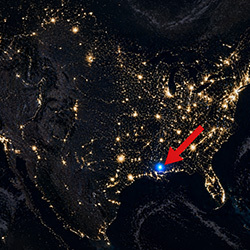
Confirmed by satellites 300 miles above the Earth's surface... Elon Musk is rolling out a breakthrough technology that could replace our need for foreign oil and ignite a $10 trillion boom a small group of stocks. Click here to learn how you can invest in this before it becomes mainstream. FINAL FRAME Chip stocks fell before their own reports, and the AI trade spread into credit. Blackstone and Apollo lined up credit money for assets abroad. Binance's reopening looked orderly as unfreezable coins moved. Senate and Israel contracts priced votes that may take weeks to settle. Capital moves early. Coverage catches up. The gap between the two is worth watching. Same Rate Move. Three Different Bills.The 10-year went from 4.19% to 5.29% this year. Every company on your screen felt that. They don't feel it on the same schedule. Some earn more when rates rise. Some pay more. The difference shows up in earnings, one report at a time. We traced three of them: IBKR, WRB and FIS. FREE Special Report: Rates Just Reset. Who Feels It First? Who earns it fast. Who earns it slowly. Who pays. One has already reported. The other two report next, and the report tells you the exact line to check. We'll text the report straight to your phone. Text Me the Three Names → (free) |