


The Fed decides Wednesday. PCE and GDP land Thursday. Apple, Amazon, Meta, Robinhood, Coinbase, and Chevron test whether cash flow can outrun the cost stack.
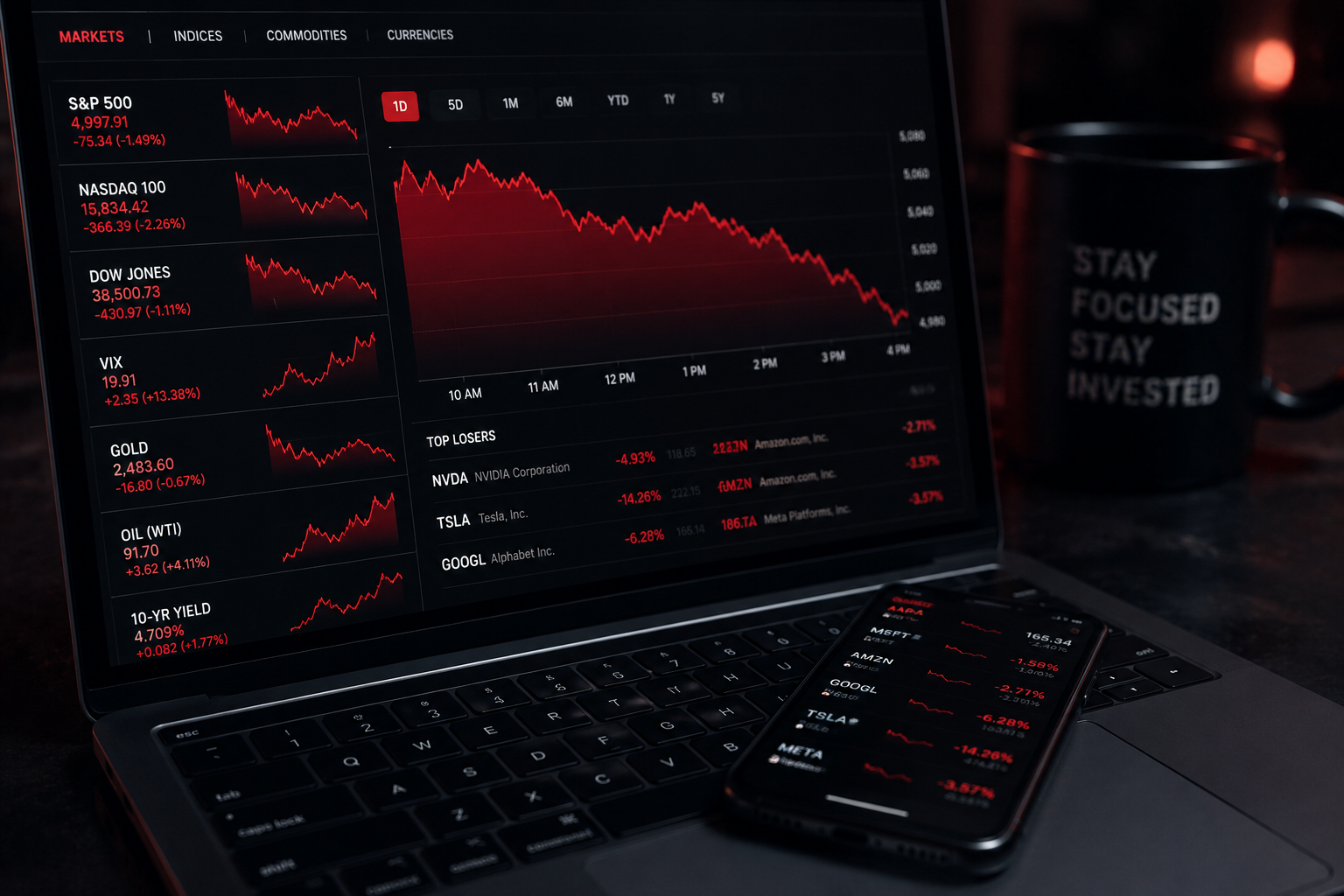
Last week changed the market’s question again.
The old question was whether AI demand was real. Alphabet (GOOGL) answered yes. Search grew 17%. Cloud grew more than 80%. Super Micro Computer (SMCI) gave the buildout another proof point with more than $60 billion in new orders.
The market still sold.
Alphabet raised 2026 capex to $195 billion to $205 billion. Free cash flow turned negative. Tesla (TSLA) grew revenue more than 25% and still fell because profit missed and cash flow went negative too. Brent broke $100. The 10-year topped 4.70%. September priced a hike.
Then Friday changed the policy floor. Section 122 expired. Section 301 duties began. The tariff wall became more durable.
This week starts with that full cost stack in place.
The Fed decides Wednesday. PCE, core PCE, GDP, income, spending, and jobless claims land Thursday. Employment costs and Michigan sentiment close the week Friday. Apple, Amazon, Meta, Visa, Mastercard, Robinhood, Coinbase, Chevron, Valero, KLA, Lam Research, Ford, UPS, Boeing, and Costco all report.
The question is no longer whether growth exists.
The question is whether growth can fund itself while oil, tariffs, and rates all rise.
Here are the six tests that matter.
The Big AI Story Nobody Knows

There's a website called RentAHuman.ai. Its tagline: "Robots need your body."
721,000 people across 100 countries have signed up.
And according to Alexander Green - the man who bought Apple under $1, Netflix at $1.62, Amazon under $2* - this is the clearest signal yet that Phase 2 of the AI supercycle has arrived. (Split adjusted prices)
He's identified three companies set to dominate this next phase.
Does Warsh Hold Without Sounding Done?
The Fed decision lands Wednesday.
The market still expects a July hold. But last week took away the comfort around the next meeting. July stayed mostly written. September became the real fight.
That is because oil moved too fast for the Fed calendar.
Brent broke $100. WTI moved above $90. The 2-year yield rose above 4.36%. The 10-year moved above 4.70%. Polymarket took September hike odds near 50%. October hike odds moved above 30% at the worst point.
Warsh is in a hard spot.
A hold is easy to explain. Soft June CPI and PPI support patience. The problem is the forward input. Oil, freight, insurance, tariffs, and AI capex all point to higher costs.
What to Watch
The statement matters less than the press conference. If Warsh says July is a hold but inflation risk has risen, the market keeps September alive.
Does PCE Confirm Relief or Cancel It?
Thursday is the data center of the week.
PCE and core PCE arrive with GDP, personal income, personal spending, and jobless claims. That is four rate inputs in one morning.
The timing matters.
Last week’s CPI and PPI helped the relief story. Then oil and tariffs weakened it. PCE decides whether the Fed can still lean on backward data while the forward cost stack heats up.
GDP tests the growth side. Personal spending tests the consumer. Income tests whether households can carry higher gas, higher rates, and higher import costs. Jobless claims test whether tech layoffs are staying narrow or spreading.
The market can survive soft inflation with slower growth. It can survive strong growth with stable inflation. It struggles with sticky inflation and slowing demand.
What to Watch
Core PCE is the first read. Spending is the second. Claims are the third. If all three point the wrong way, September becomes the live meeting.
Iran Desperately Needs This From America
Trump is about to cut Iran off at the knees. One tiny North Carolina town supplies 80% of the world's most critical semiconductor material. Business Insider calls it "crucial to make chips that power everything from smartphones to data centers." When Trump bans exports, Iran's tech infrastructure crumbles — and every chipmaker on Earth is forced to relocate to U.S. soil. Morgan Stanley estimates the reshoring boom triggers a $10 trillion transformation. A handful of U.S. companies stand to capture most of it. Full details here.
Does Labor Cost Make the Fed’s Job Harder?
Friday brings the employment cost index, wages, benefits, Chicago PMI, and Michigan consumer sentiment.
This is the hidden Fed test.
Oil can be called a shock. Tariffs can be called a one-time level change. Wages cannot be dismissed as easily.
If employment costs stay firm, Warsh has less room to call inflation temporary. If benefits rise, the pressure sits inside company margins. If wages rise while sentiment falls, the consumer gets squeezed from both sides.
Chicago PMI adds the industrial read. Michigan sentiment adds the household read.
This matters because companies are already swapping people for hardware. Last week, the AI buildout showed strong demand for chips, power, and data centers. It did not show strong demand for labor.
What to Watch
Firm wages with weak sentiment would be the worst mix. It keeps the Fed hawkish while consumers feel worse.
Do Apple, Amazon, and Meta Clear the New AI Bar?
The megacap test continues.
Apple (AAPL), Amazon (AMZN), and Meta Platforms (META) report after Alphabet and Tesla failed to calm the tape.
The bar is now clear.
Demand is not enough. The market wants demand with cash flow. It wants capex without a margin warning. It wants AI spending that lifts the next quarter, not just the next decade.
Apple tests device demand and AI feature adoption. Amazon tests cloud growth through Amazon Web Services and the cost of AI infrastructure. Meta tests ad demand, AI monetization, and spending discipline.
The Alphabet lesson hangs over all three. Cloud growth above 80% did not save a stock when capex rose and free cash flow turned negative.
What to Watch
The cleanest report is one with higher AI revenue and no capex shock. Any surprise spending raise will be read through the Alphabet lens.
The Verdict Is In for AI Stocks in the second half of 2026

The AI trade that made the Mag 7 soar is starting to crack.
Overpriced giants like Nvidia, Tesla, and Amazon are facing slowing returns — just as smaller, lesser-known names are positioning to take market share.
Waiting could be costly.
Three under-the-radar AI stocks are already showing the potential to outperform the Mag 7 in the second half of 2026.
Make sure these alternatives are on your radar before markets open tomorrow.
Does the AI Supply Chain Still Earn the Buildout Premium?
The hardware side gets a heavy week.
KLA (KLAC), Lam Research (LRCX), Teradyne (TER), Monolithic Power Systems (MPWR), Cadence Design Systems (CDNS), Amphenol (APH), Corning (GLW), and Equinix (EQIX) all matter to the AI buildout.
This group reads the chain from design software to equipment to test gear to connectors to glass to data-center space.
Last week punished the supply side when spending looked too heavy. TSMC’s capex raise turned into a cost warning. Alphabet’s spending raise did the same. The question now is whether suppliers can show that higher spend is becoming revenue, not just cost.
Equinix is especially important. If the AI capex cycle is real, data-center demand should show up in leasing, pricing, and backlog. Cadence reads chip design activity. KLA, Lam, and Teradyne read the semiconductor production cycle.
What to Watch
Strong orders with clean margins support the buildout story. Strong orders with margin pressure repeat last week’s problem.
Does the Real Economy Absorb the Cost Stack?
This week also tests the economy outside AI.
Visa (V), Mastercard (MA), PayPal (PYPL), Robinhood (HOOD), Coinbase (COIN), and Strategy (MSTR) read payments, trading, and crypto activity. Costco (COST), Procter & Gamble (PG), Coca-Cola (KO), Mondelez (MDLZ), Chipotle (CMG), Yum Brands (YUM), and Hershey (HSY) read household demand.
Ford (F), AutoZone (AZO), O’Reilly Automotive (ORLY), Royal Caribbean (RCL), Hilton (HLT), and American Tower (AMT) test autos, repairs, travel, and infrastructure demand.
Chevron (CVX), Valero (VLO), Enterprise Products Partners (EPD), Targa Resources (TRGP), Southern Company (SO), American Electric Power (AEP), Exelon (EXC), Xcel Energy (XEL), Dominion Energy (D), and Sempra (SRE) test the energy and utility side.
That side matters more after Brent broke $100.
If energy companies guide higher while consumer names guide lower, the K-shape gets sharper. If Visa and Mastercard show steady spending while Costco and staples hold margins, the consumer is still absorbing the shock.
Robinhood and Coinbase bring the prediction-market and crypto layer. Analysts already expect Robinhood’s prediction-market revenue to challenge crypto revenue. Coinbase must prove bitcoin’s bounce turned into trading volume.
What to Watch
Payments and energy can both look strong. The key is whether consumer companies can hold margins after oil and tariffs move higher.
I Became a Millionaire Here While I Was Still in College
This little-known building in Pasadena is where I learned about a kind of investment most people never get access to. Twenty years later, that same opportunity is wide open again. And it's all because of what's about to happen to OpenAI and Anthropic.
This ad is sent on behalf of InvestorPlace Media at 1125 N. Charles Street, Baltimore, Maryland 21201. If you're not interested in this opportunity, please click here.
Last week proved demand was not the issue.
AI demand was real. Orders were real. Cloud growth was real. Earnings beats were real.
The problem was the bill.
Capex rose. Cash flow fell. Oil broke $100. September hike odds moved higher. Tariffs became more durable. The market stopped paying for proof without payback.
This week decides whether that reset spreads.
The Fed gives the policy frame Wednesday. PCE and GDP give the macro answer Thursday. Labor costs and sentiment close the week Friday. Apple, Amazon, and Meta test whether megacap AI can avoid Alphabet’s cash-flow problem. KLA, Lam, Teradyne, Cadence, and Equinix test whether the supply chain still earns the buildout premium. Visa, Mastercard, Costco, Ford, Robinhood, Coinbase, Chevron, and Valero test whether the real economy can absorb the cost stack.
The week ahead is not about one event.
It is about whether the system can carry all of them.
Growth has to fund itself. Inflation has to stay backward-looking. Oil has to stop feeding the curve. Tariffs have to stay out of margins. The Fed has to hold without sounding finished.
That is a narrow path.
Last week changed the question.
This week starts the answer.
