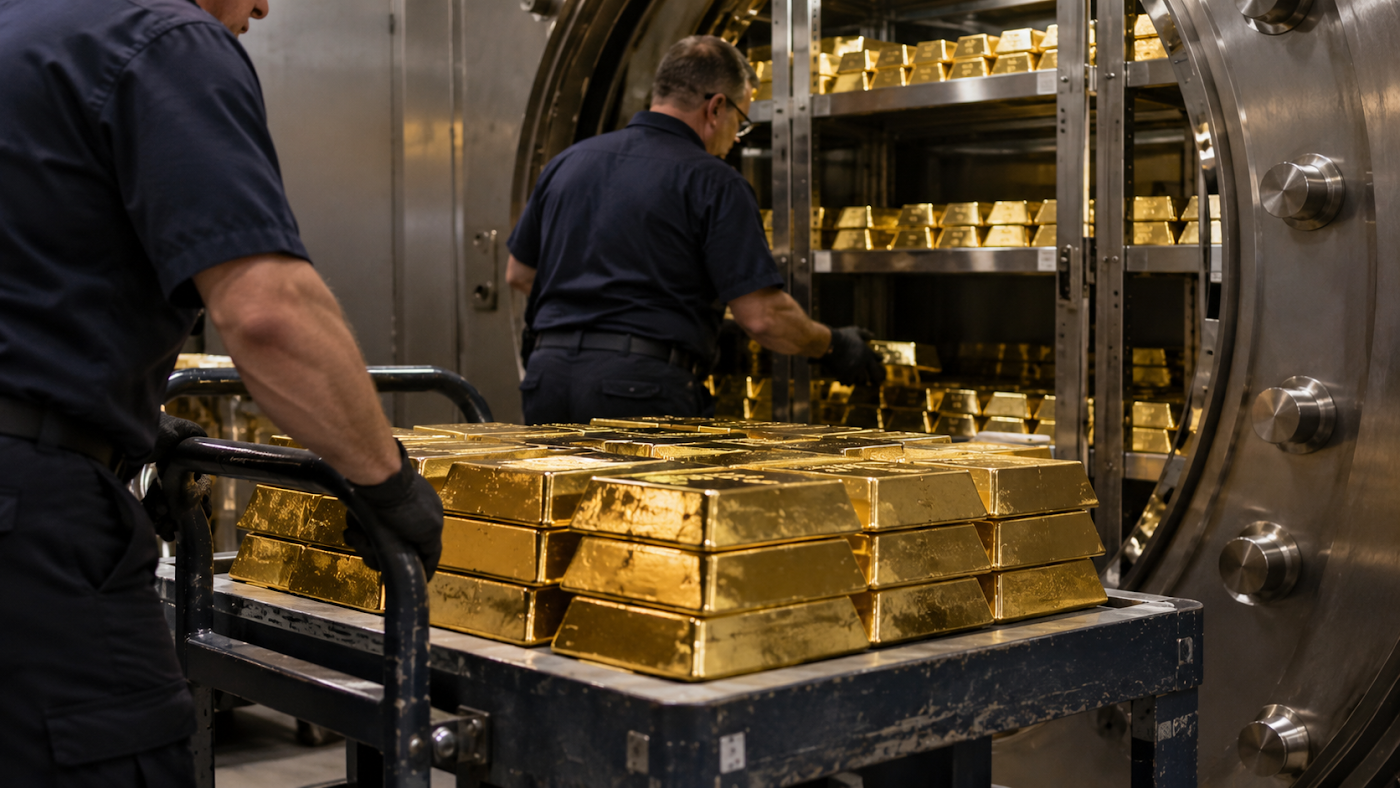
THE DAILY PULSE Monday gave the market the pressure it expected, then took away part of the oil shock.The Nasdaq fell 0.92%. The S&P 500 lost 0.77%. The Dow dropped 0.67%. The VIX rose 8% to 16.07. The pressure came from rates first. The 10-year yield closed at 5.24%. Gold dropped 4% and the dollar finished higher on rising yields. WTI touched $96.54 after Trump rejected Iran’s proposal, then faded to $92.80 after reports that Saudi Arabia had restored major flows through the East-West pipeline. It still finished slightly higher, up 0.45%. The spike faded. The bond pressure did not. Prediction markets read the same split. WTI hitting $100 in September fell to 9%. WTI above $95 sits at 57%. A move down to $90 is 43%. The oil panic cooled, but the rate tape stayed hard. PREMIER FEATURE Fast Movers or Steady Earners? Nuclear Has BothNot every investor wants the same thing from nuclear stocks. Some want high-growth momentum tied to uranium prices. Others prefer steadier revenue backed by long-term contracts and infrastructure spending. Our analysts took a balanced approach in a FREE report — pairing both in one list. 7 Top Nuclear Stocks to Buy Now highlights companies positioned to benefit as nuclear demand accelerates into 2026 and beyond. Download your free copy today before it moves behind the paywall. THE LEAD SIGNAL Oil stopped being the only stress point.In the morning, the setup was simple. Trump rejected Iran’s terms. Oil jumped. Yields rose. Futures sold off. Saudi Arabia had restored pipeline flows to about 3.5 million barrels a day and resumed loadings from Yanbu. That took pressure out of crude. It did not take pressure out of rates. If oil had stayed near the highs, the selloff would have been easy to read. Instead, oil backed off and stocks still closed lower. The 10-year closed at 5.24%. Gold broke. Tech sold. That says the tape is not only pricing Hormuz anymore. The Rate Stick Crude gave back the spike and the tape still sold. That's the part worth sitting with, because a selloff on $96 oil explains itself while a selloff on $92 oil does not. Saudi flows took the Hormuz premium out and the 10-year closed at 5.24% anyway, which leaves rates as the standing constraint rather than a passenger. Oil was never the whole problem. It was the part that moved fastest. THE ARCHITECTURE The oil book stopped betting on a spike and started betting on both directions at once.WTI closed at $92.80 after trading much higher earlier. WTI hitting $100 in September sits at 9%. That is down from the morning’s 35%. The move tells you how quickly the market took out the worst Hormuz premium once Saudi flows improved. WTI hitting $90 sits at 43%. A move to $85 sits at 21%. A drop to $80 is only 5%. Traders are no longer pricing a straight spike, but they are also not pricing a full collapse. The physical story fits that range. Saudi flows are improving. Hormuz is still not normal. Iran still says diplomacy is the only path. Trump rejected the latest proposal but expects more talks. The Pipeline Discount Saudi flows cut the spike and Hormuz keeps the range alive. Restored volumes through the East-West line remove the tail where the strait closes entirely, which is why the $100 contract collapsed. They do nothing about a waterway still running below normal on terms two governments haven't agreed. The book shows both: a dead upside and a live $90 at 43%. Oil isn't trending, it's waiting. THE CROSS-CURRENTS Gold showed what higher yields do when inflation fear does not disappear.Gold fell 4% to $4,146.20, and the books fell harder. Kalshi's September contract has above $4,170.99 at 34%, down 53 points on the day, and above $4,250.99 at 11%, down 70. The year-end book moved with it. Above $4,300 sits at 50%, down 17. Above $4,500 is 18%, down 22. Above $5,000 is 8%. That isn't a positioning wobble. Higher yields raised the cost of holding a non-yielding asset, and the market marked down where gold ends the year, not just where it ends the month. The Yield Cost Higher rates don't kill gold, they raise the rent on holding it. Monday took 3.74% off spot and twenty-plus points off every year-end strike above $4,300, which means the market repriced the destination rather than the path. A fear trade that answers to real yields stops hedging the thing causing the yields. Watch whether the year-end book recovers when rates stall, or only when they fall. THE PREDICTION MARKET LAYER Polymarket has $220 million riding on a regulator it has never argued with.Polymarket traders have placed more than $220 million across roughly 31,000 equity-linked markets. Almost 60% of that activity is tied to individual stocks such as Nvidia, Alphabet, Apple and Tesla. Sports contracts raise gambling-law questions. Stock contracts raise securities-law questions. U.S. law generally treats single-stock derivatives as security-based swaps, which fall under SEC oversight and are mostly restricted to professional investors. Kalshi does not list individual-stock markets, but it does list contracts tied to indexes and corporate metrics like iPhone launches and Tesla deliveries. That still keeps the category close to the SEC-CFTC line. The Equity Line Sports brought state law and stock contracts bring securities law. Single-stock derivatives are treated as security-based swaps, which puts them under the SEC and largely out of reach for retail, a different regime from the CFTC fight that has run all year. Polymarket now has $220 million across roughly 31,000 equity-linked markets, with almost 60% tied to individual names. Kalshi stopped short of single stocks and lists indexes and corporate metrics instead. One venue is testing a new regulator. The other is staying inside the one it already has. PARTNER SPOTLIGHT Major Buy Alert Issued 
Keith Kaplan has invested $17 million into his own AI research and tools. He's built a platform that 180,000 people worldwide use in the stock market. Now he says there's a handful of stocks you need to buy asap, to set yourself up for 1,000% potential returns in the near future. Here are the stocks you need to buy for the chance to profit. This ad is sent on behalf of TradeSmith at 1125 N. Charles Street, Baltimore, Maryland 21201. If you're not interested in this opportunity, please click here. THE FORETELL LENS Four inputs landed Monday, and only one softened.The first was oil. WTI gave back most of the spike after Saudi flows improved, and the $100 contract fell to 9%. The second was rates. The 10-year closed at 5.24%, which kept pressure on equities even after crude cooled. The third was gold. Every year-end strike above $4,300 lost double digits, because higher yields raised the cost of holding metals. The fourth was venue risk. Prediction markets are no longer only pricing politics, sports and macro. They are now pushing into individual stocks, where the regulatory frame is different. The contracts showed relief in crude, stress in rates, stress in metals and a new legal frontier in equities. The Four-Book Split One book cooled and three kept the pressure on. Crude backed off, while rates held above 5.2%, gold's year-end strikes broke, and equity-linked contracts opened a regulatory question nobody has litigated yet. A day that reads as oil relief on the screen looks like three separate tightenings underneath it. The relief was real. It was also the smallest thing that happened. FINAL FRAME Monday answered the morning with a partial reversal.Oil lost most of its spike. Stocks still fell. The 10-year closed at 5.24%. Gold sold off. Prediction markets moved deeper into equity-linked products, drawing a new layer of regulatory attention. What is priced: WTI at $100 in September at 9%, WTI at $90 at 43%, gold above $4,300 at year end at 50%, and gold above $5,000 at 8%. What is not priced: the 10-year staying near 5.25%, Saudi flows failing again, gold's year-end book staying broken after rates stall, or equity-linked contracts pulling the SEC deeper into prediction markets. The oil spike faded. The rate trade did not. Capital moves early. Coverage catches up. The gap between the two is worth watching. 3 Market Signals Most Investors Aren't WatchingThe headline is usually the last place the story shows up.
By the time everyone is talking about a stock… the signals underneath it may have been changing for weeks. • Institutional money moves. • Options activity changes. • Management confidence shifts. • Fundamentals improve, or quietly begin telling a different story. That’s exactly what our analysts found in three stocks where the evidence stopped agreeing with itself.
And in all three cases, the story is still developing. See the 3 Stocks, Get the Free Report → |